The Year 1 Recognise and Name 3D Shapes PowerPoint guides both teachers and children through the lesson, including use of the varied fluency, reasoning and problem solving, practical activities and continuous provision resources. Key learning information about this step:
Key Vocabulary
3D shape: A 3D shape is a solid shape we can pick up.
face: A face is a flat part of a 3D shape.
curved surface: A curved surface is not flat.
point: Some 3D shapes have a point.
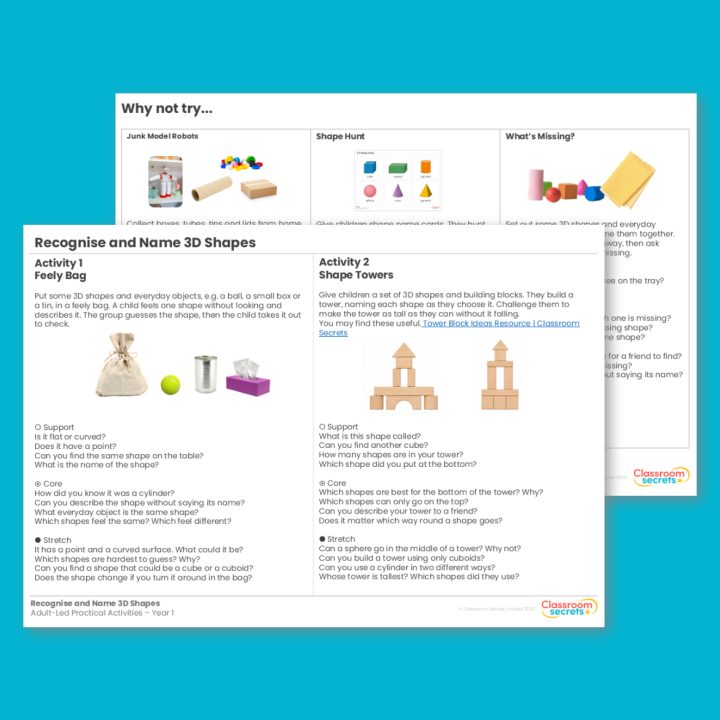
Adult-Led Practical Activities
• Activity 1: Feely Bag. Children feel a hidden shape, describe it and guess its name.
• Activity 2: Shape Towers. Children build towers with 3D shapes and name each shape they use.
You will need:
• a set of 3D shapes and a feely bag (or pillowcase)
• everyday objects, e.g. boxes, tins, balls, tubes and party hats
• building blocks in different shapes and sizes
Why not try…
• Junk Model Robots - Children build a robot with junk items and name the 3D shape of each part.
• Shape Hunt - Give children shape name cards. They hunt around the classroom or outdoors for objects that match.
• What’s Missing? - Set out some 3D shapes and everyday objects on a tray and name them together. Cover the tray, take one away, then ask children which shape is missing.
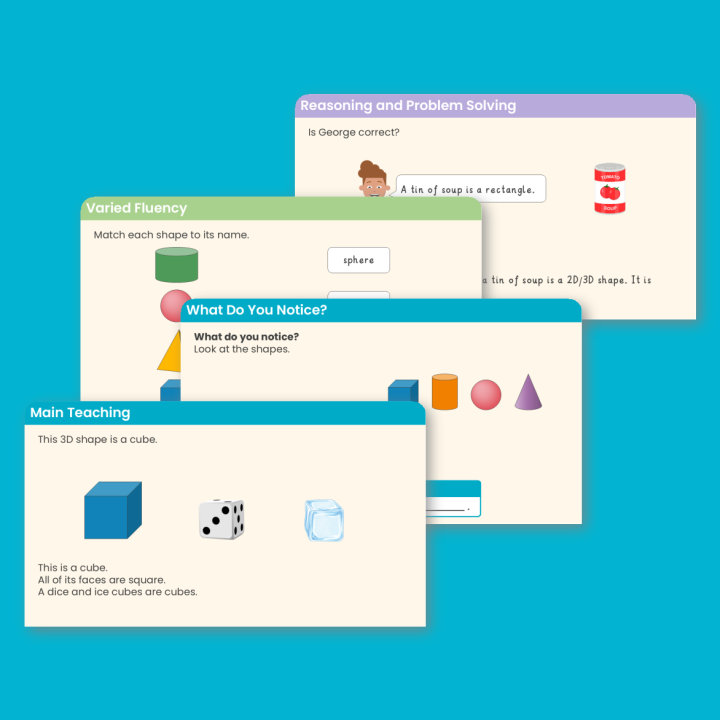
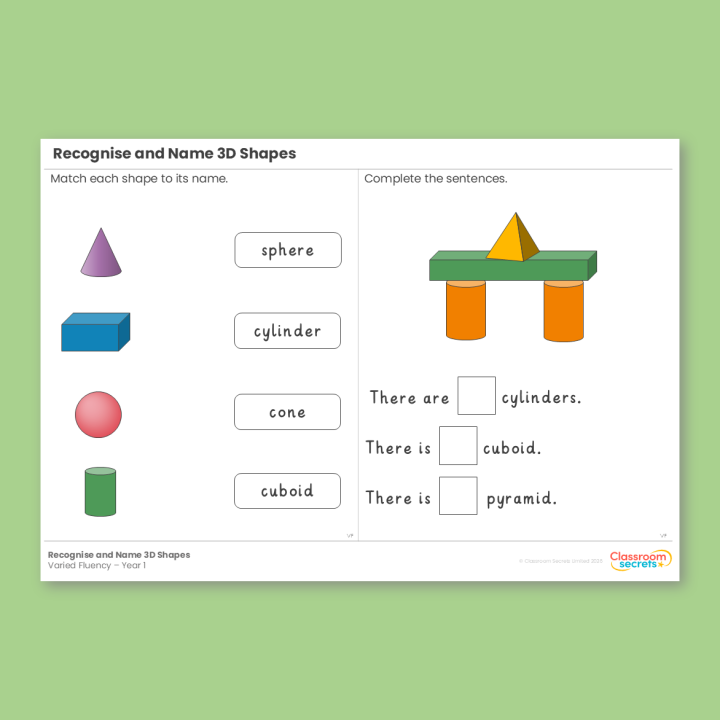
Varied Fluency
• Q1: Match 3D shapes to their names.
• Q2: Count the 3D shapes in a model.
Reasoning and Problem Solving
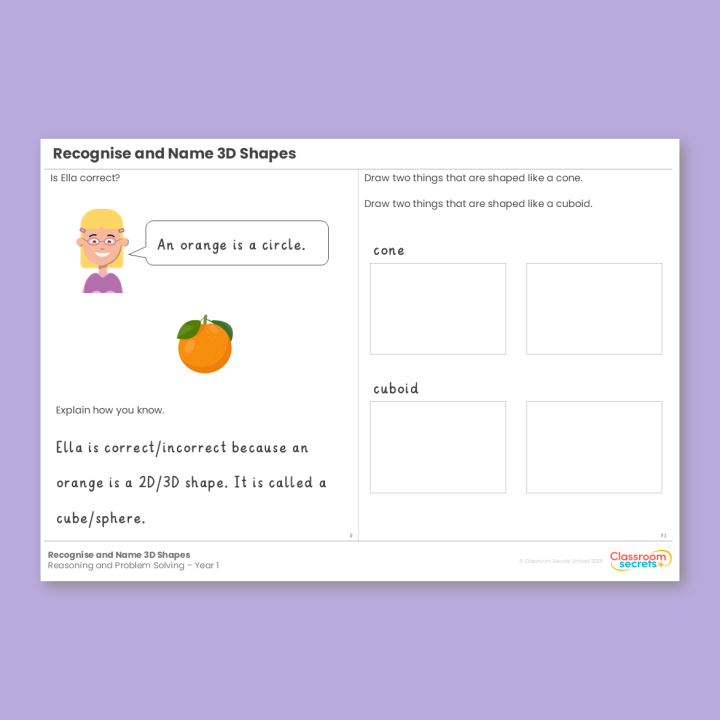
• Q1: Reasoning – explain that an orange is a 3D shape (a sphere), not a circle.
• Q2: Problem Solving – draw everyday objects that are shaped like a cone and a cuboid.
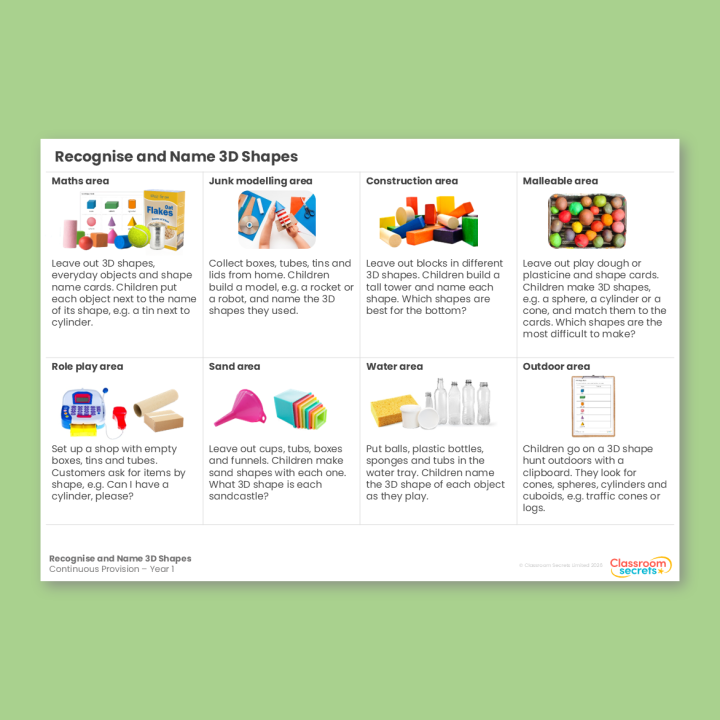
Continuous Provision
• Maths area – match everyday objects to 3D shape names.
• Junk modelling area – build junk models and name the shapes.
• Construction area – build towers and name the shapes.
• Malleable area – make 3D shapes from play dough.
• Role play area – shop for items by their 3D shape.
• Sand area – make sand shapes with containers.
• Water area – name the shapes of objects in the water.
• Outdoor area – hunt for 3D shapes outdoors.