Welcome to our Classroom Secrets blog!
Welcome to our Classroom Secrets blog!
Our blog area is dedicated to bringing you key education and business updates in one central place.
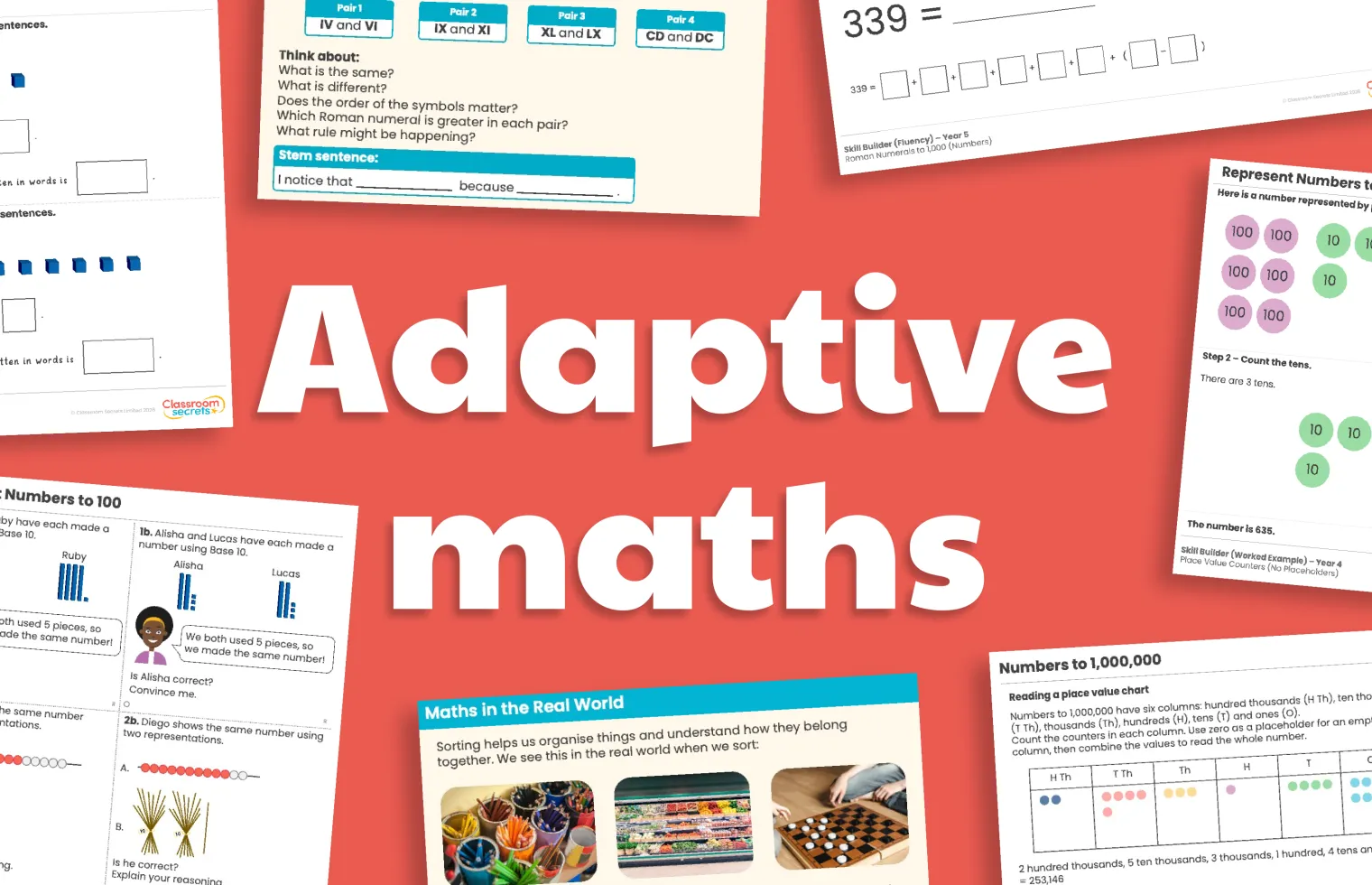
Our mission is to see progress for every child, not just the average child. That's why are creating our new adaptive maths resources. Read all about them on our latest blog.
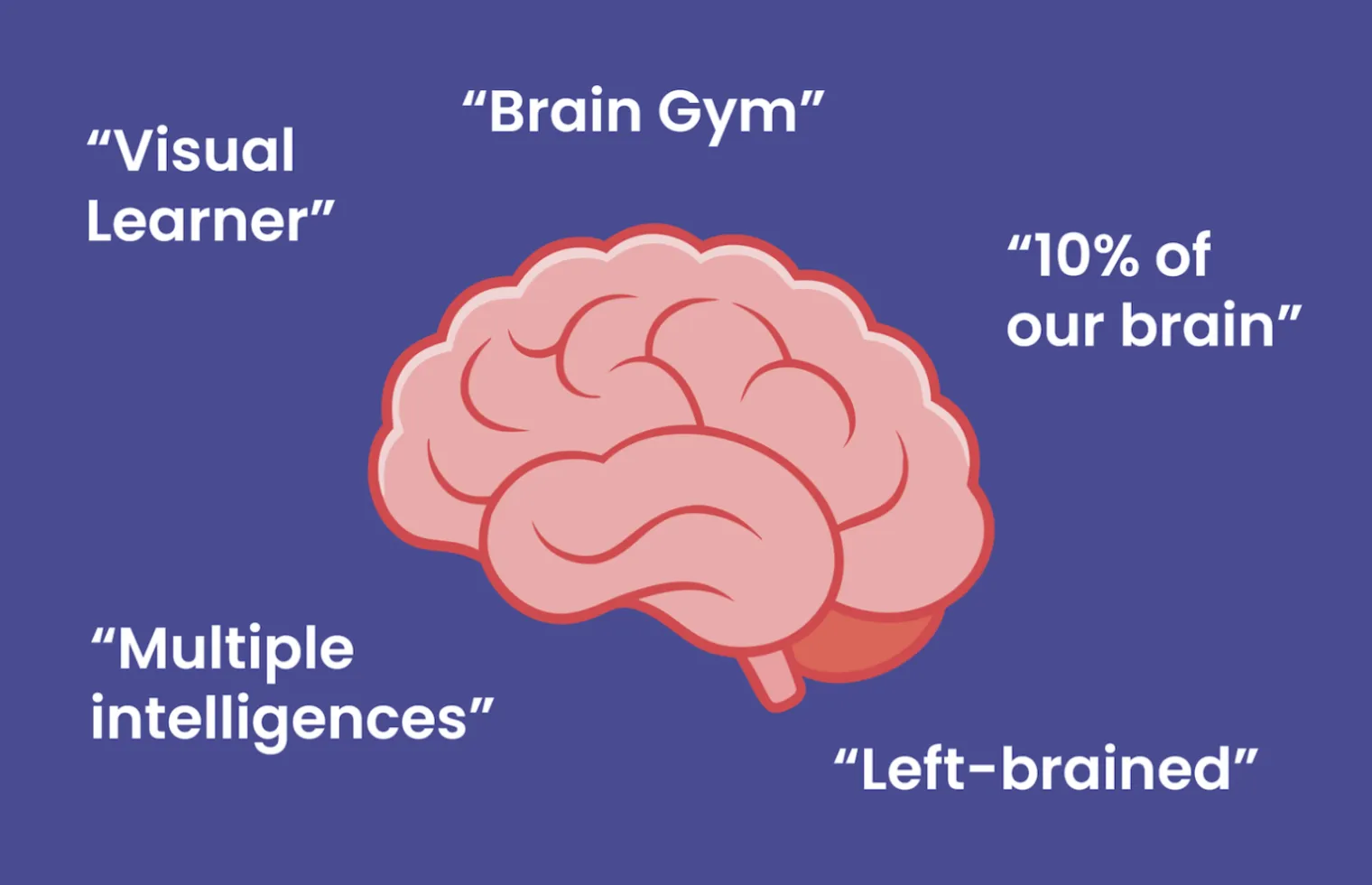
Learning Styles, Left-Brain Learners and Other Neuromyths (Part 1)…
This is the first in a short series of blogs exploring neuromyths, pseudoscience and some of the more questionable ideas that have found their way into education.
16th October 2026
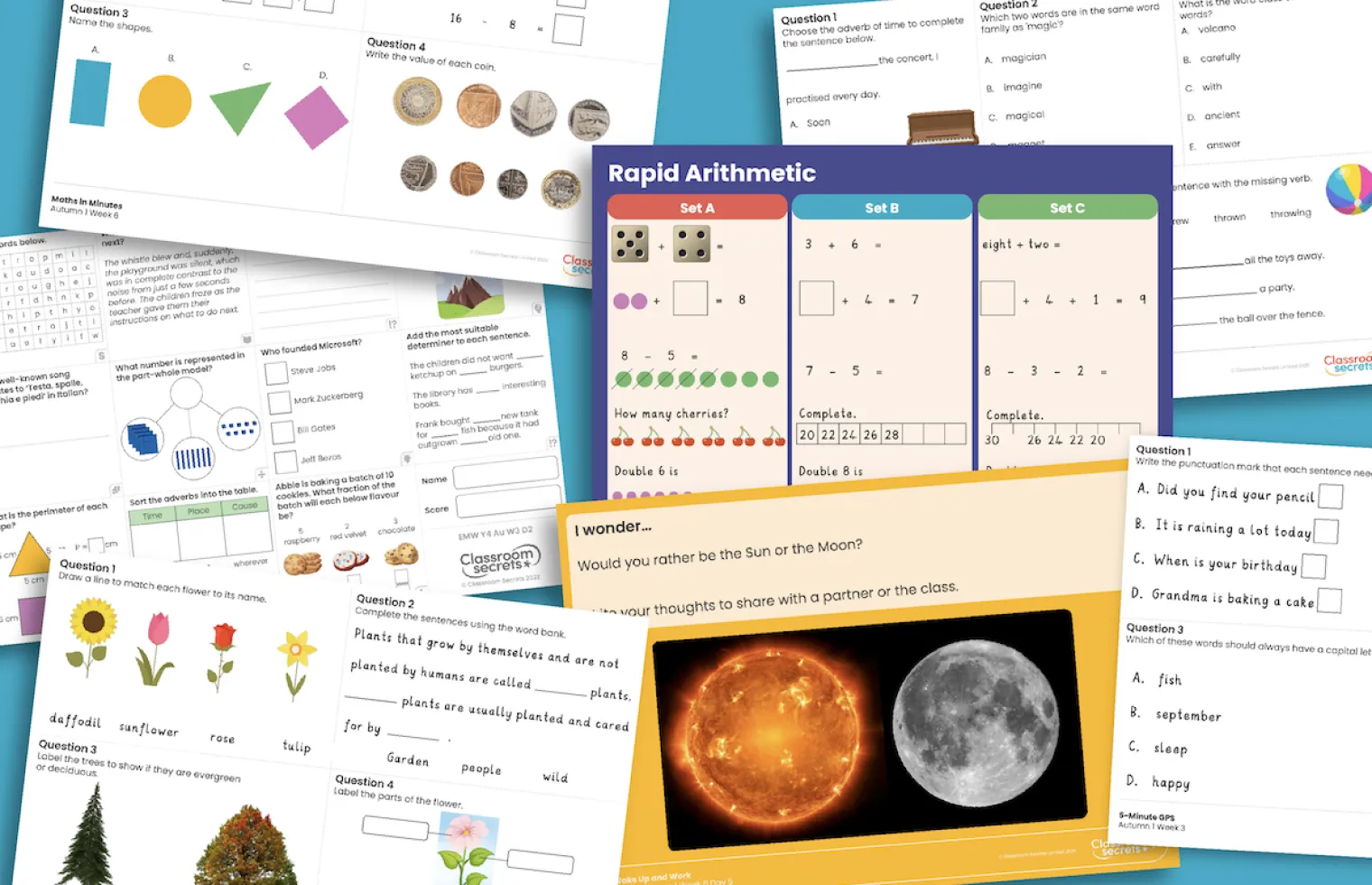
Making the Small Gaps in the School Day Count
Not every part of the school day needs a full lesson. Sometimes you have ten minutes while everyone settles in, five minutes at the start of maths or a small gap before assembly. Sometimes you simply know that something taught last half term could do with coming back before children start to forget it.
23rd September 2026

My Class Won't Stop Talking: What Actually Helps with a Chatty Class?
Possibly the least helpful sentence in history. Few sentences could be less reassuring after you’ve just asked the same class to stop talking for the 27th time. So, are you now a failure of a teacher? Is this class possessed of some rare behavioural quirk that allows them to collectively change their behaviour for you, and you alone? Probably not.
18th September 2026
Ofsted Inspections from September 2026: What Primary Schools Actually Need to Know
Teachers wanted change. They are much less convinced by what replaced it. When Ofsted announced that single-word judgements were going, teachers were, on the whole, pretty positive about the idea. In January 2025, Teacher Tapp asked 9,587 teachers how they felt about replacing single-word judgements with a scorecard-style system. 56% supported the change, while 13% opposed it. Fast forward to August 2026, with the new report cards now actually being used in schools, and the picture looks very different.
17th September 2026

How Do I Help My Child with Maths? Simple Ways to Support Maths at Home
At one time or another, most parents find themselves asking the same question: how do I help my child with maths? The good news is that you do not need to be a maths expert or remember every method you were taught at school.
16th September 2026
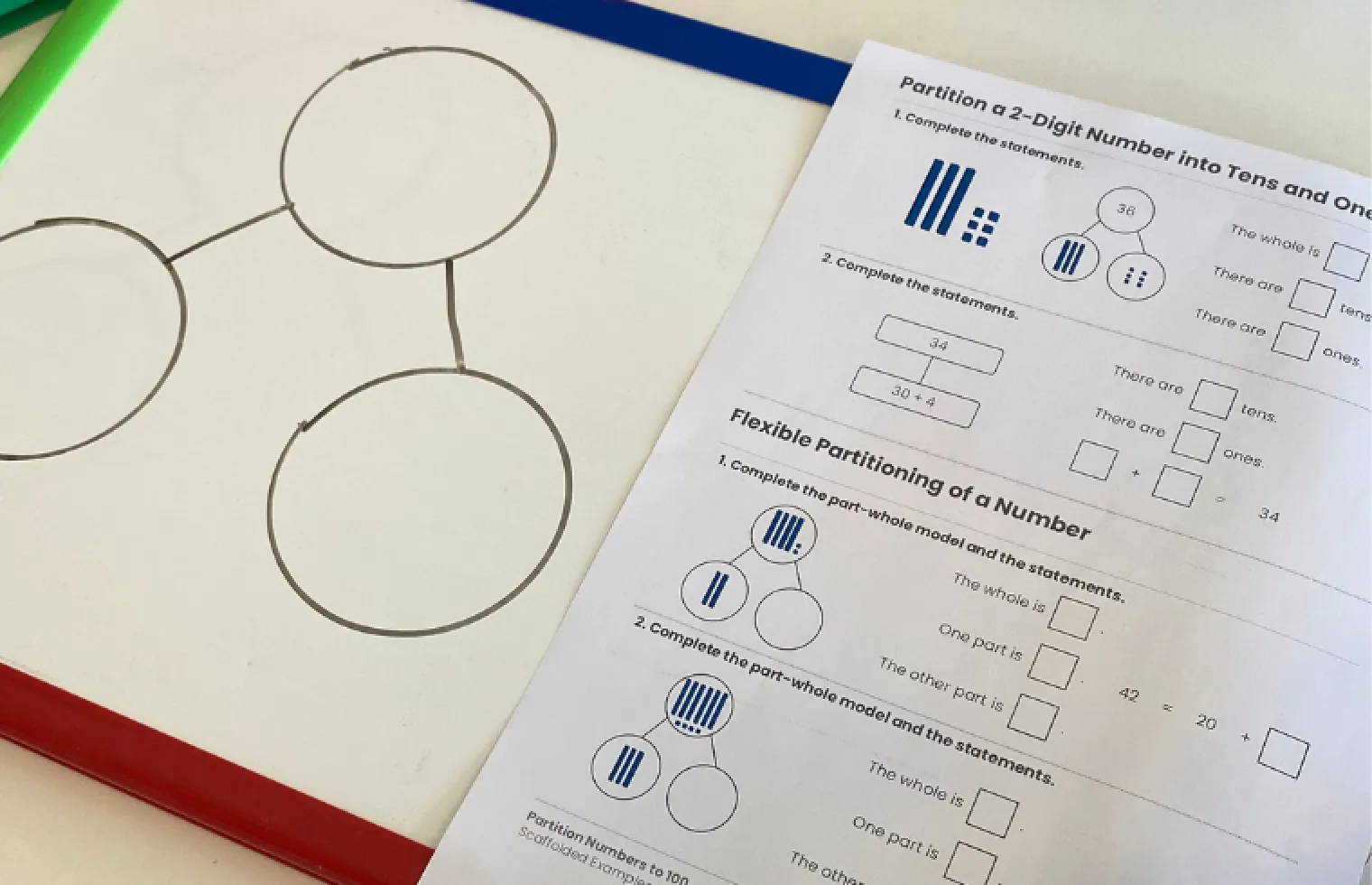
30 Children, 30 Starting Points: How Do You Actually Teach One Maths Lesson?
How to Differentiate Maths for Different Abilities: A Practical Guide There are 30 (or so) children in your class. They are all about to learn the same maths concept, but they are not all starting in the same place. Some have completely secured the learning that comes before it. Some can remember most of it with a prompt. Some have gaps you already know about. Others might surprise you once the lesson begins.
11th September 2026
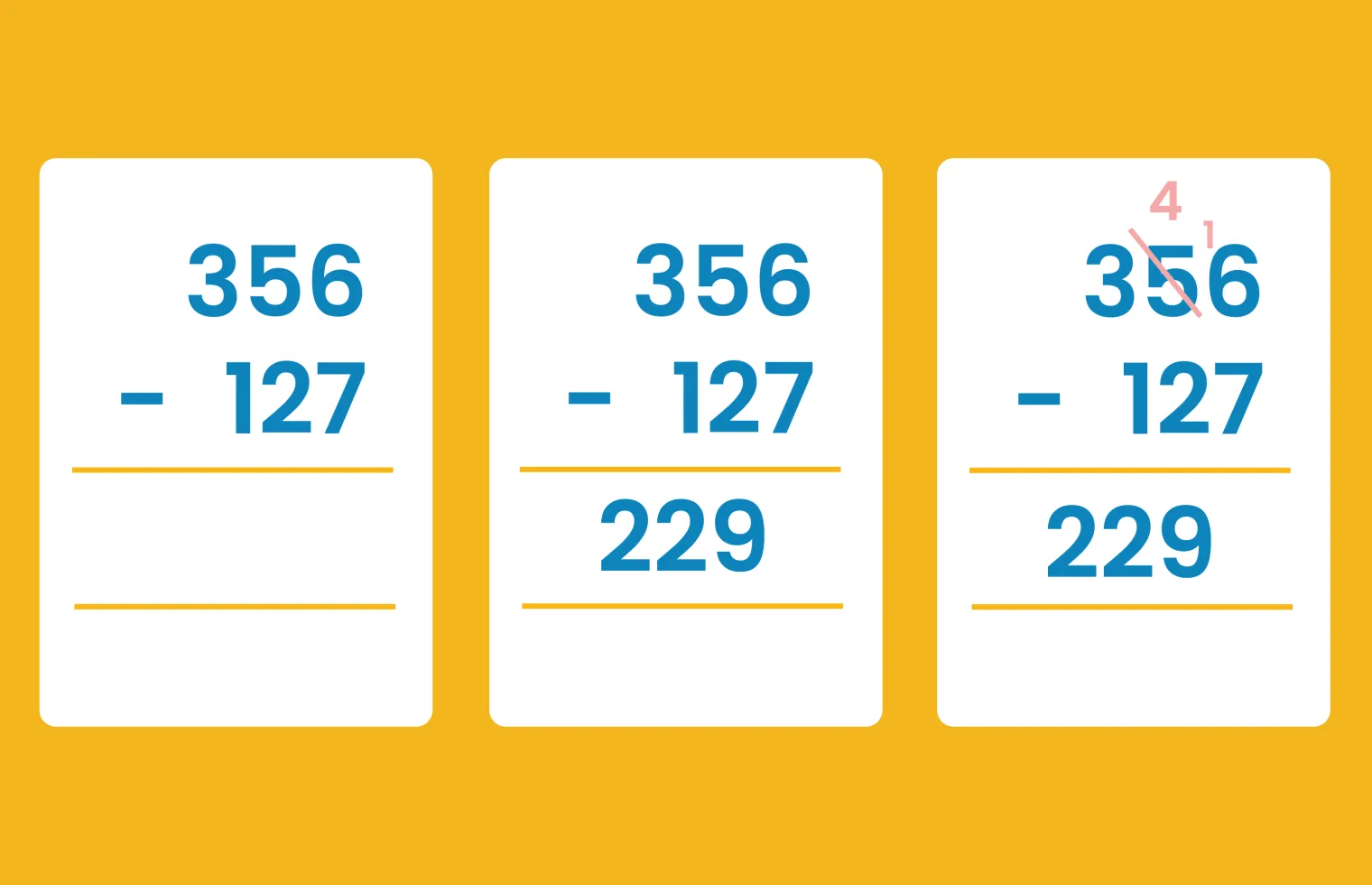
What Are Worked Examples in Maths and When Should You Use Them?
What is a worked example? Pretty much what it sounds like. Instead of giving children a question and asking them to solve it, a worked example shows how the problem has been solved, usually step by step. That might mean showing how to bridge through 10, how to partition before using a written method or how to work through the information in a multi-step problem. The important bit is that the example should show more than the final answer.
2nd September 2026
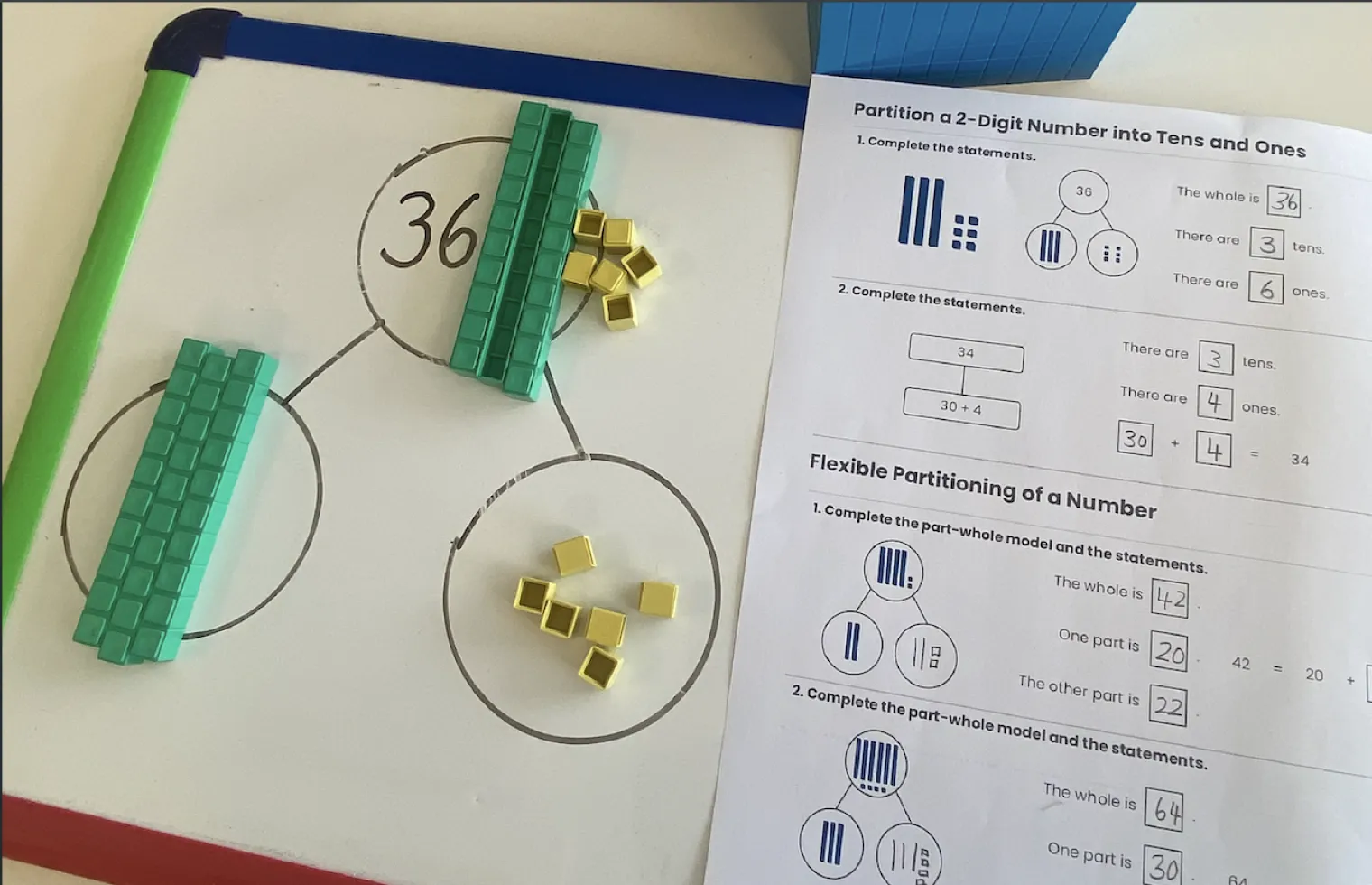
What Does Good Scaffolding Look Like in a Primary Maths Lesson?
Scaffolding is temporary support A scaffold helps a child do something they cannot yet do independently. Good scaffolding is not the same as making the work easier and leaving it there, or putting support in place that becomes something the child cannot manage without. Scaffolding is temporary. The point is to help a child access the mathematics they are meant to be learning, then reduce that support when they no longer need it.
1st September 2026
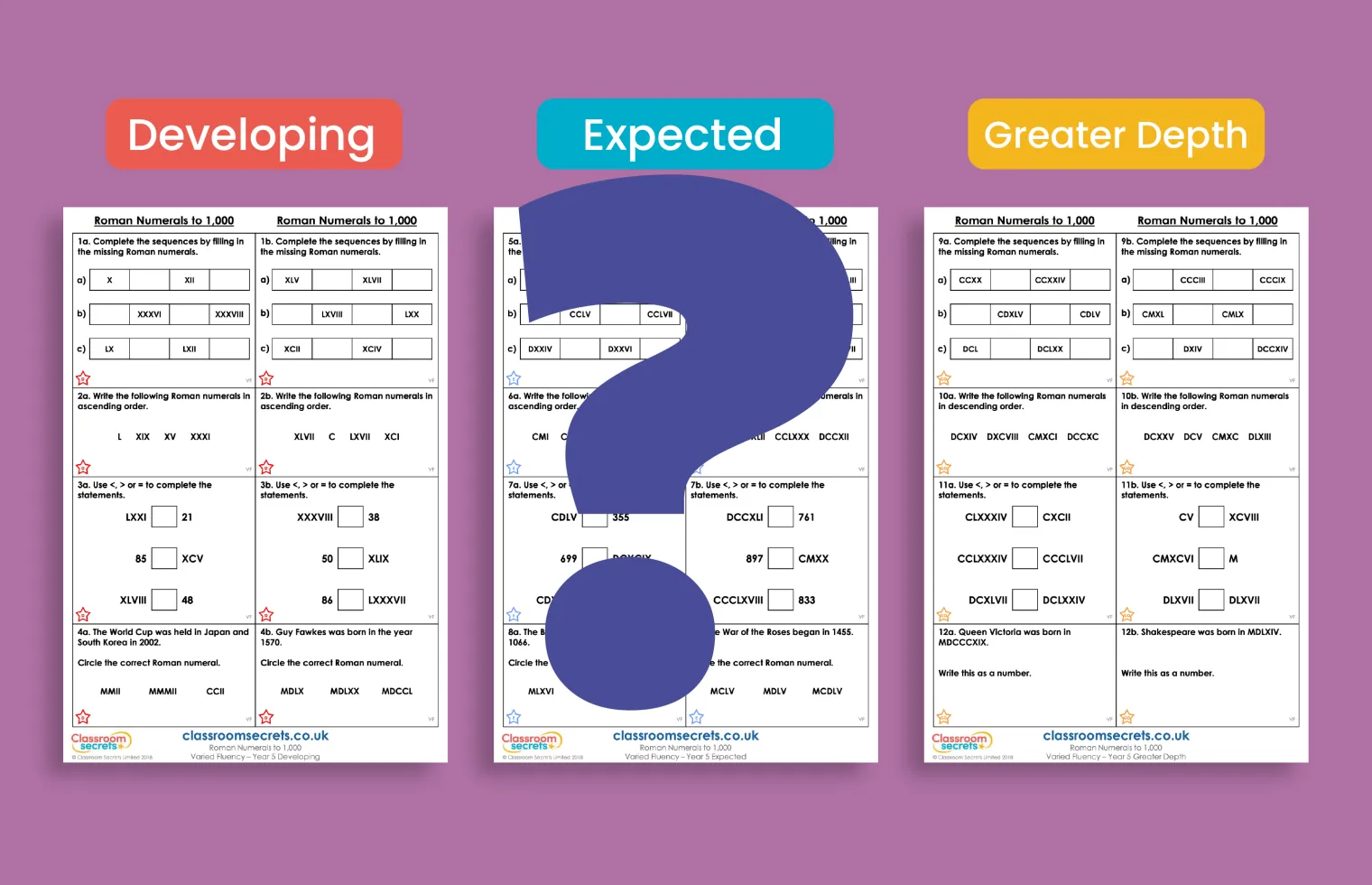
Should We Still Use Developing, Expected and Greater Depth in Primary Maths?
They are useful words, but there’s more than three types of child Developing, Expected and Greater Depth are deeply familiar in primary schools. They have been used in assessment conversations, planning documents and on teaching resources for years. They were on ours too. There was a logic to it. Developing sounded like more support. Expected sounded like the main task. Greater Depth sounded like the harder one.
24th August 2026
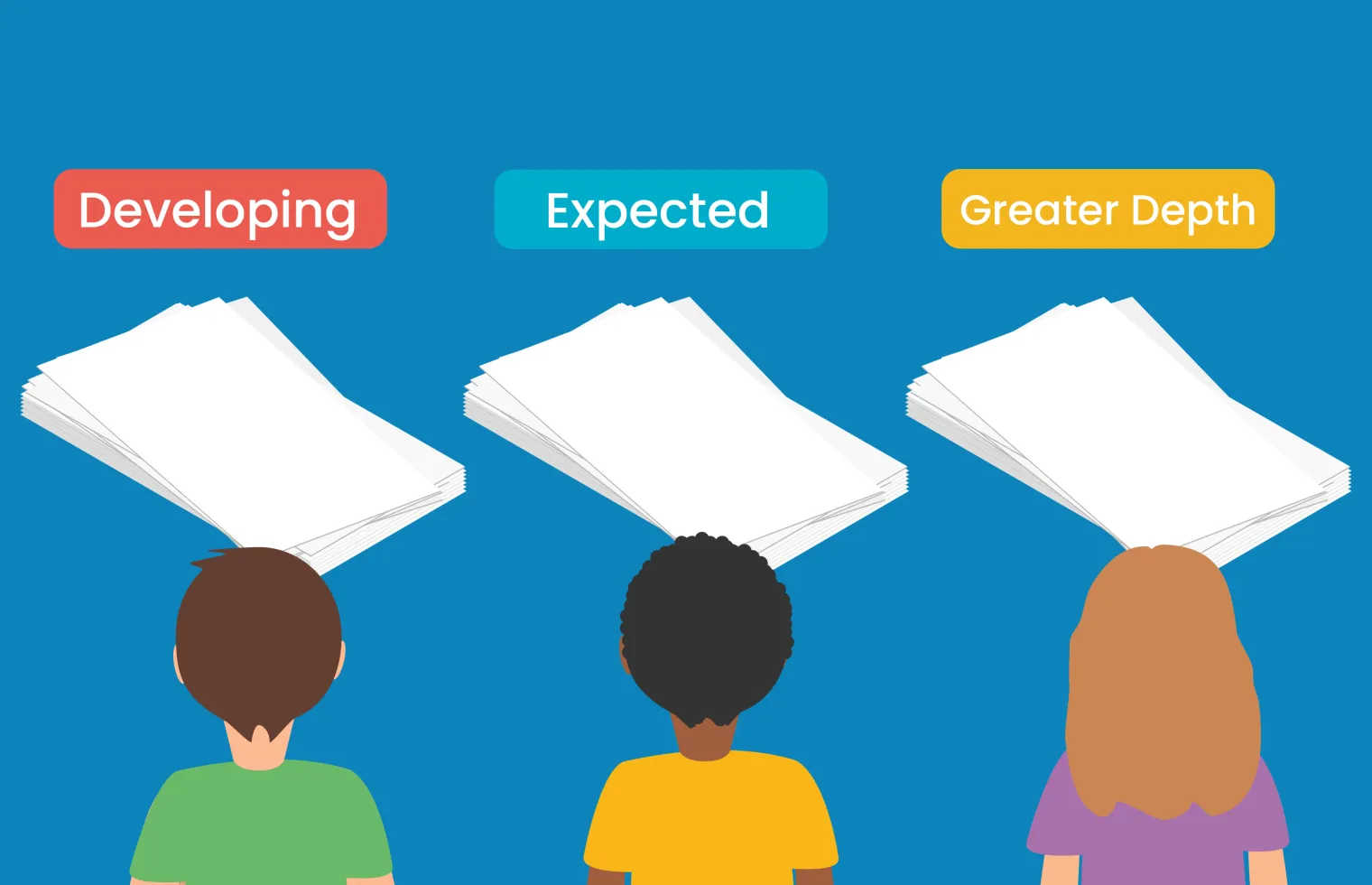
What’s Wrong with Three-Way Differentiation in Primary Maths?
Opening with a weird answer: There is nothing inherently wrong with having three versions of a maths task. Sometimes one child needs more structure. Perhaps another is ready to work independently. And maybe another child has the knowledge secure and needs more complexity.
24th August 2026
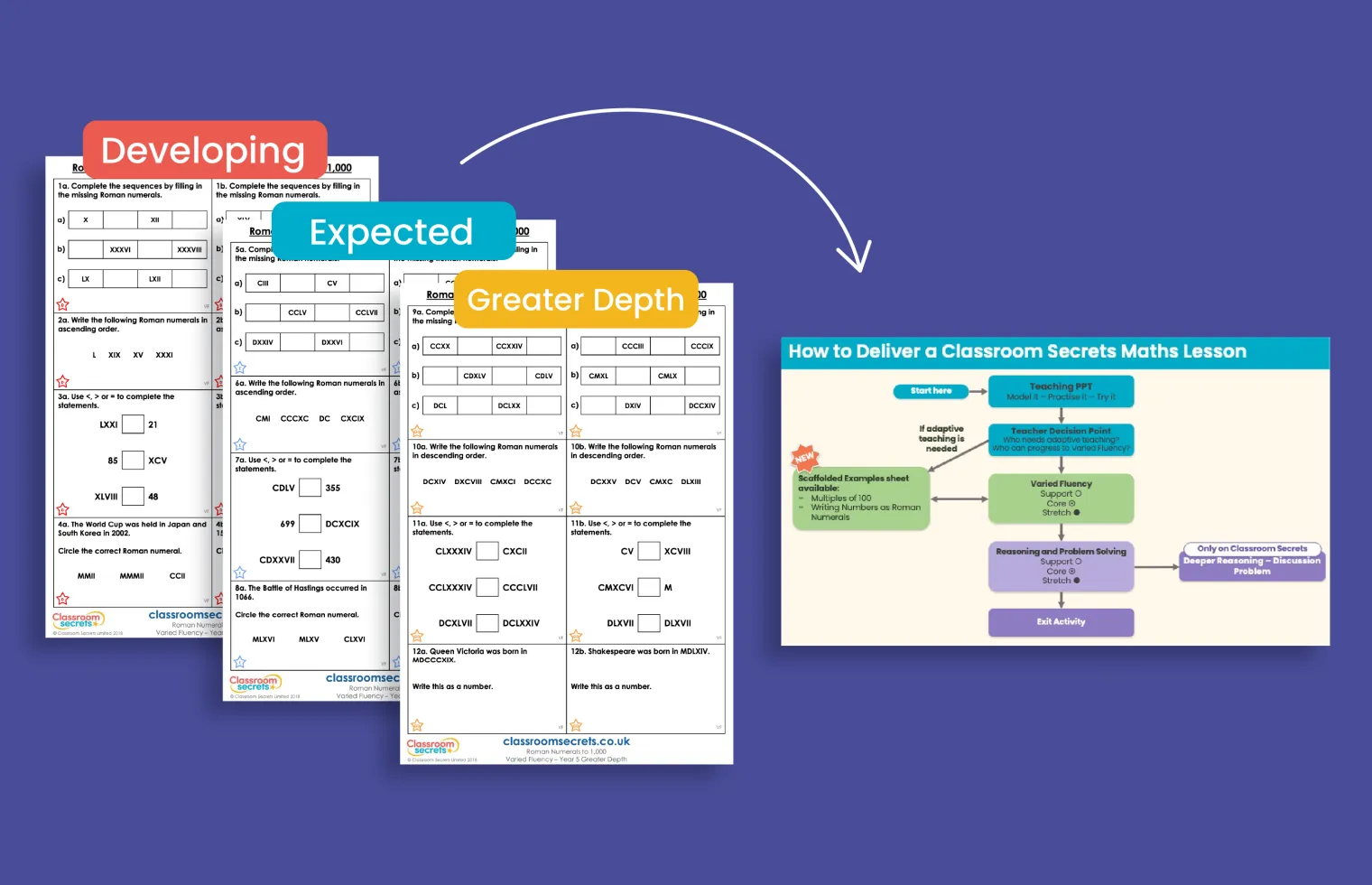
Adaptive Teaching vs Differentiation: Should You Still Differentiate in Primary Maths?
So, should teachers still differentiate? An oversimplified answer first: Yes. Children are different, so teaching has to respond to those differences. Then a little more nuanced: What needs to change is the idea that differentiation means planning three versions of every maths lesson in advance.
21st August 2026

How do you lay out your classroom? Here’s some things to consider.
Whether you are moving into a new classroom or simply just fancy a change, something that we always think about is how to lay out your classroom (and who sits next to who!). I’ve asked our teachers at Classroom Secrets and in our Facebook groups what works for them. Here’s some things to consider!
11th August 2026
Progress for every child: introducing Classroom Secrets Adaptive Maths
No two maths lessons are quite the same. No two skills are quite the same. And no two children are quite the same. A child who works confidently with place value may need additional modelling when learning about reflection. Another may understand a concept securely but need support with the vocabulary used to explain their reasoning. What pupils need can change from topic to topic, lesson to lesson, and even within the same lesson.
7th August 2026

What does Continuous Provision in Year 1 look like and how do I make it work?
Continuous provision is having a bit of a moment. (Which is great news!) It has been talked about in staffrooms, shared across social media, featured in the news and even debated in Parliament after more than 100,000 people signed a petition calling for play-based learning to be a core part of KS1 (House of Commons Library).
20th July 2026
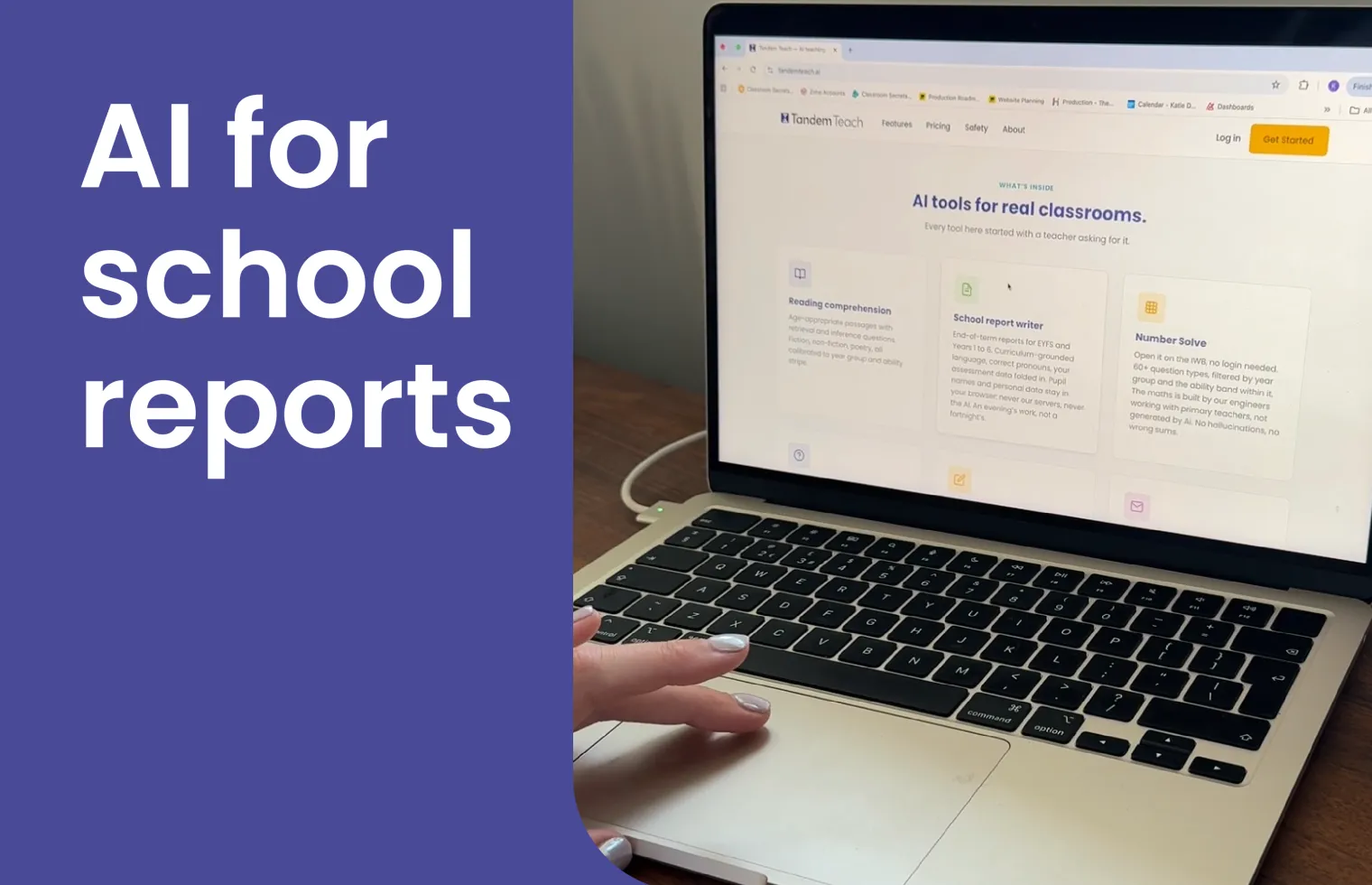
AI for school reports: how Tandem Teach helps teachers write better report comments
School report writing is one of those jobs that can take over. You know the children so well. You’ve had so many highs and lows over the year. If you had the time, you could write a book about them. But with so many reports, and with you already pushing the upper limits of how many hours there are in a week, something has to give.
11th June 2026
What has changed in the Year 1 Phonics Screening Check Administration Guidance?
The 2026 Phonics Screening Check Assessment and Reporting Arrangements has landed - hot off the GOV.UK press - and, while a lot of it will feel very familiar to you, there are some genuinely important changes that you need to know before June.
30th April 2026
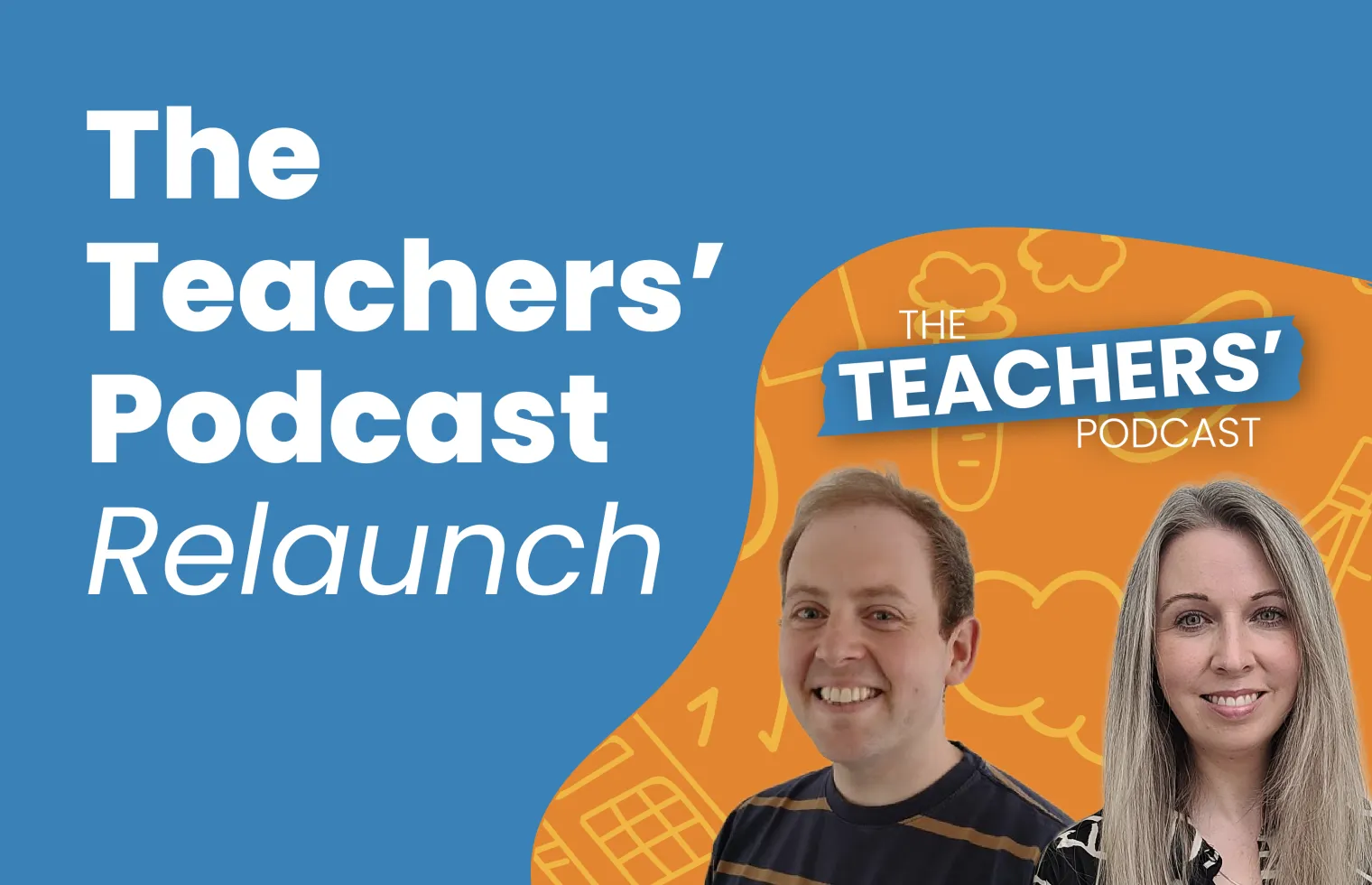
The Teachers’ Podcast Relaunch
We are pleased to announce the relaunch of The Teachers’ Podcast! After a hibernation, our ever-popular podcast aimed at teachers, teaching assistants and all those who work in classrooms is returning with a few changes to refresh it for 2026 while still retaining being a ‘helpful friend’.
13th April 2026
Meeting the Needs of EAL Students in the Classroom
Did you know that, on average, around 20% of pupils in UK classrooms have English as an Additional Language (EAL)? Of course, this is just an average. In some areas, the percentage is much lower whilst in others, much higher. In some areas, for example, London, parts of the West Midlands and the Northwest, more than 50% of pupils speak a language other than English as their first language.
1st April 2026
Our new resource line – 5-Minute GPS!
This is a brand-new creation tailored for you to use in the classroom to meet your class’s GPS needs. Following the success and structure of our 5-Minute History and 5-Minute Science resources, as well as our ever-popular Maths in Minutes, these are designed to give you easy and instant access to a range of GPS questions.
23rd March 2026
Ideas for the week commencing 23rd March 2026
Good Friday falls on April 3rd this year which seems to have come around quickly. We all tend to break up at slightly different times for this holiday – I hope you enjoy the busy end of the term. As always, I’ve pulled together some resources which should help save you time next week.
18th March 2026
Autism
We hope you will find this blog useful in helping you to understand how you can support children on the autistic spectrum to thrive in your classroom.
12th March 2026
Understanding ADHD in Education
ADHD (attention deficit hyperactivity disorder) is one of the most common neurodevelopmental conditions affecting children and adults alike. It also flies under the radar a lot of the time, with a high rate of underdiagnosis (especially in girls/women).
12th March 2026
Ideas for the week commencing 16th March 2026
It’s the middle of March already – Easter weekend will be here in 3 weeks! Before we get there as always there are plenty of events happening in schools. I’m sharing some resources that will hopefully support you next week.
12th March 2026

Why Plants Are the Perfect EYFS Topic
Nature is just brilliant in EYFS isn’t it!? It provides the children with that amazing foundation and start into ‘Understanding the World’ by literally experiencing first-hand what our world is made of!
9th March 2026