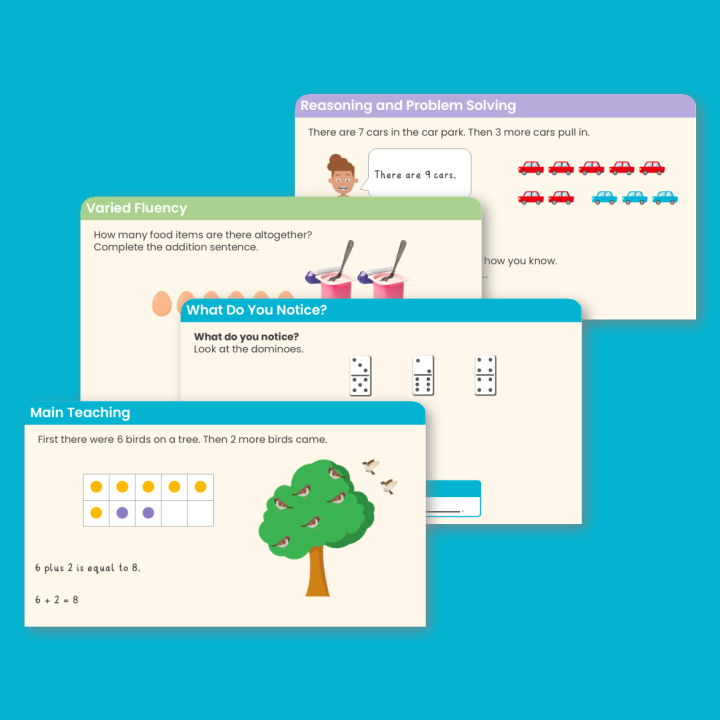
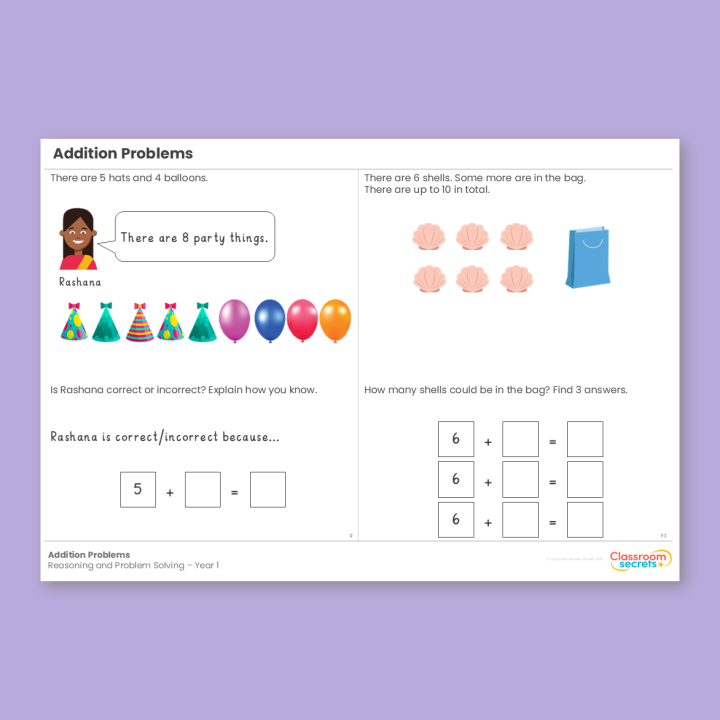
The Year 1 Addition – Addition Problems PowerPoint guides both teachers and children through the lesson, including use of the varied fluency, reasoning and problem solving, practical activities and continuous provision resources. Key learning information about this step:
Key Vocabulary
altogether: Altogether means how many there are when we add the groups.
number bond: A number bond is two parts that make a whole.
count on: We start on the first number and count on to add more.
addition sentence: An addition sentence uses + and = to show adding.
Adult-Led Practical Activities
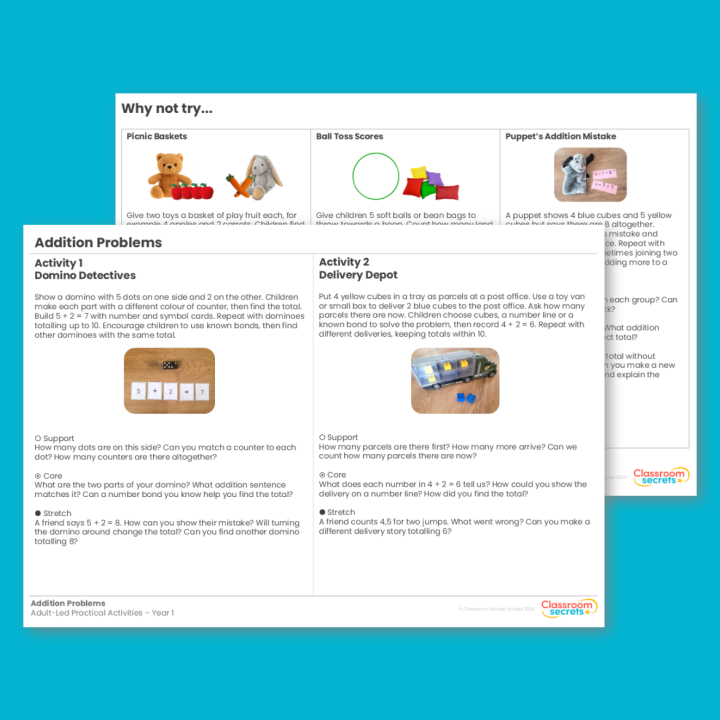
• Activity 1: Domino Detectives - use the same number of counters as dots on a domino, make an addition sentence.
• Activity 2: Delivery Depot - use cubes as parcels and a toy van/small box to deliver them, make an addition sentence.
You will need:
• dominoes with totals up to 10 and counters in two colours
• linking cubes, a tray, a toy van or small box and a number line 0 to 10
• number cards 0 to 10, plus + and = cards and whiteboards
Why not try…
• Give two toys a basket of play fruit each, children find how many pieces of fruit there are altogether.
• Give children 5 soft balls/bean bags to throw into a hoop. Count how many land inside/outside, then say the addition sentence.
• A puppet shows some cubes and says there are 8 altogether. Children check, explain its mistake and record the correct sentence.
Varied Fluency
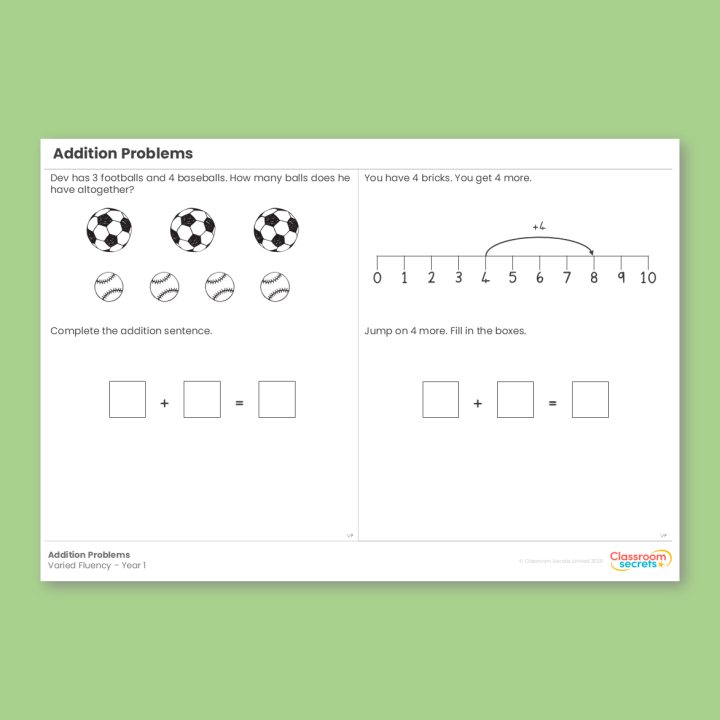
• Q1: Add the footballs and baseballs to complete an addition sentence.
• Q2: Count on along a number line to complete an addition sentence.
Reasoning and Problem Solving
• Q1: Reasoning – spot and explain the mistake when adding two groups of party things.
• Q2: Problem Solving – find the missing number of shells hidden in a bag.
Continuous Provision
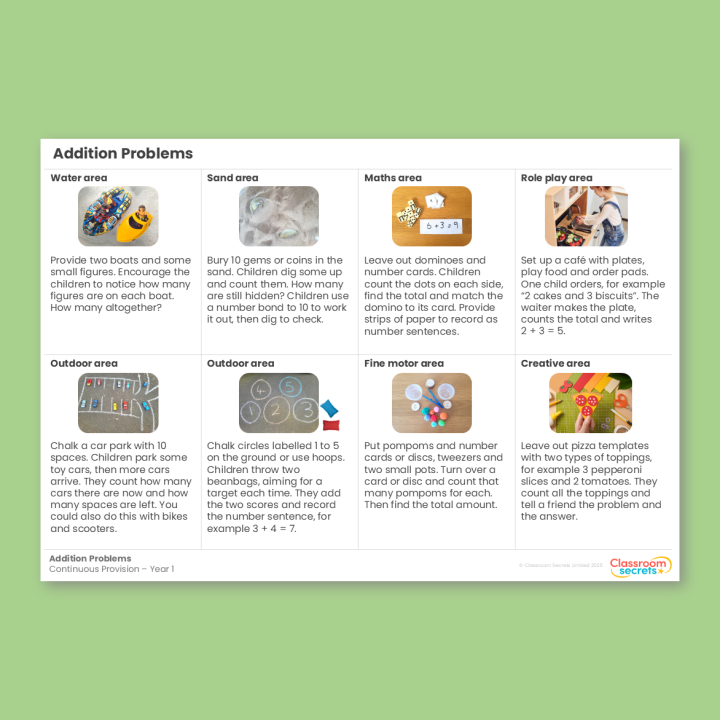
• Water area – find how many figures are in two boats altogether
• Sand area – dig up gems/coins and use a bond to 10 to find how many are hidden
• Maths area – find the total on a domino and match it to a number sentence
• Role play area – make and add up café orders
• Outdoor area – solve car park problems with toy cars
• Outdoor area - throw two beanbags at numbered targets and add the scores.
• Fine motor area – fill two pots with pompoms and find the total
• Creative area – provide pizza templates and two types of toppings to add together