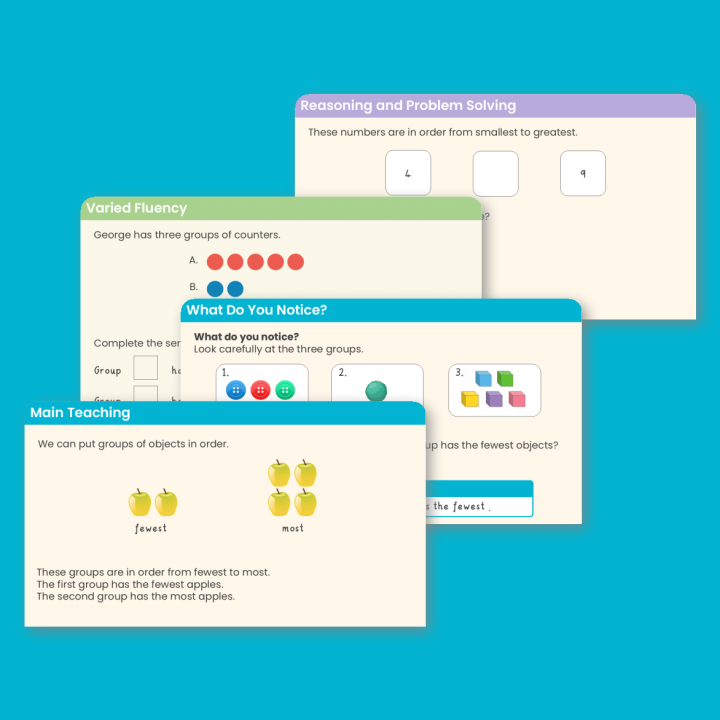
The Year 1 Fewer, More, Same PowerPoint guides both teachers and children through the lesson, including use of the varied fluency, reasoning and problem solving, practical activities and continuous provision resources. Key learning information about this step:
Key Vocabulary
most: The greatest number of objects in a group.
fewest: The smallest number of objects in a group.
greatest: The number that is more than all the others.
smallest: The number that is less than all the others.
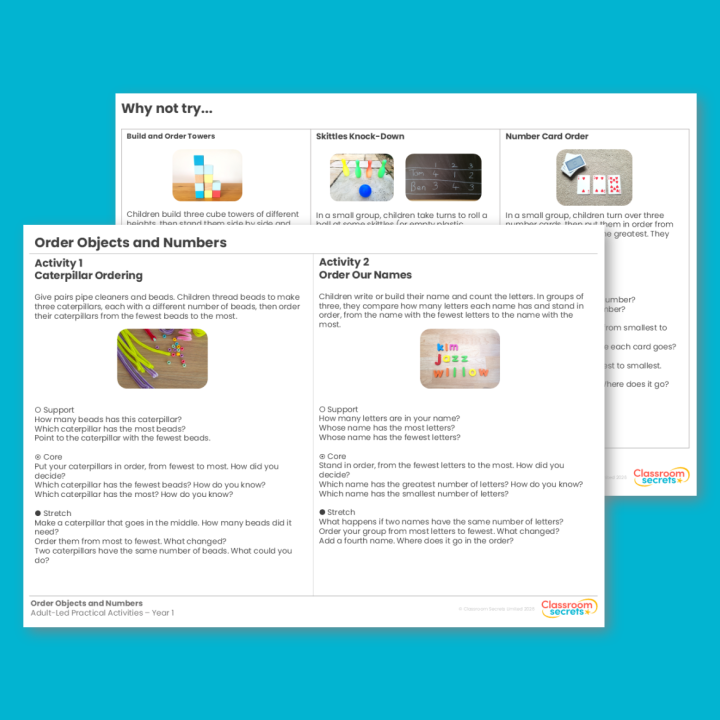
Adult-Led Practical Activities
• Activity 1: Caterpillar Ordering - make three bead caterpillars and order them from fewest beads to most.
• Activity 2: Order Our Names - count the letters in each name and order them from fewest to most.
You will need:
• pipe cleaners and beads
• whiteboards and pens, name cards or letter tiles
• space for children to stand in order
Why not try…
• Build and Order Towers - order three cube towers from shortest (fewest cubes) to tallest (most cubes).
• Skittles Knock-Down - order three skittle scores from fewest to most.
• Number Card Order - order three number cards from smallest to greatest.
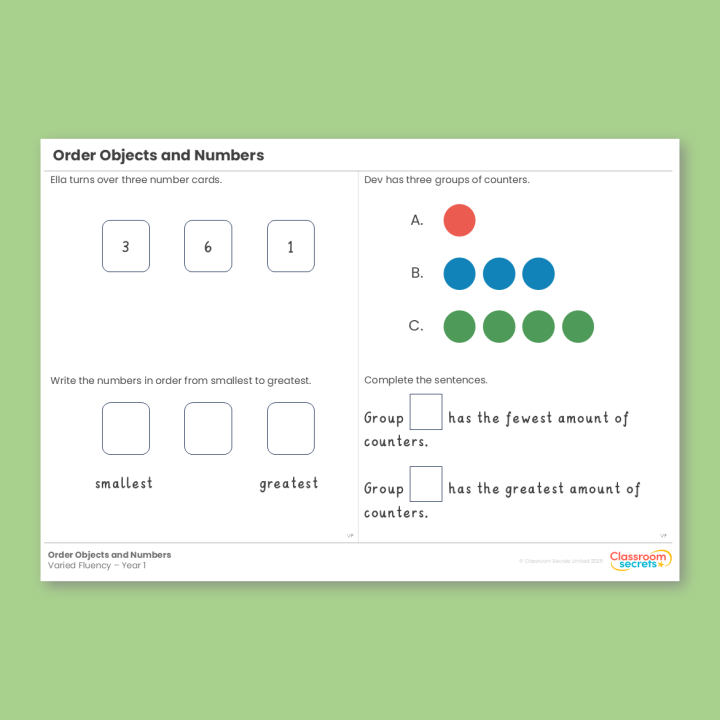
Varied Fluency
• Q1: write the numbers in the bottom boxes in the order of smallest to greatest.
• Q2: identify which group has the smallest amount and the greatest amount.
Reasoning and Problem Solving
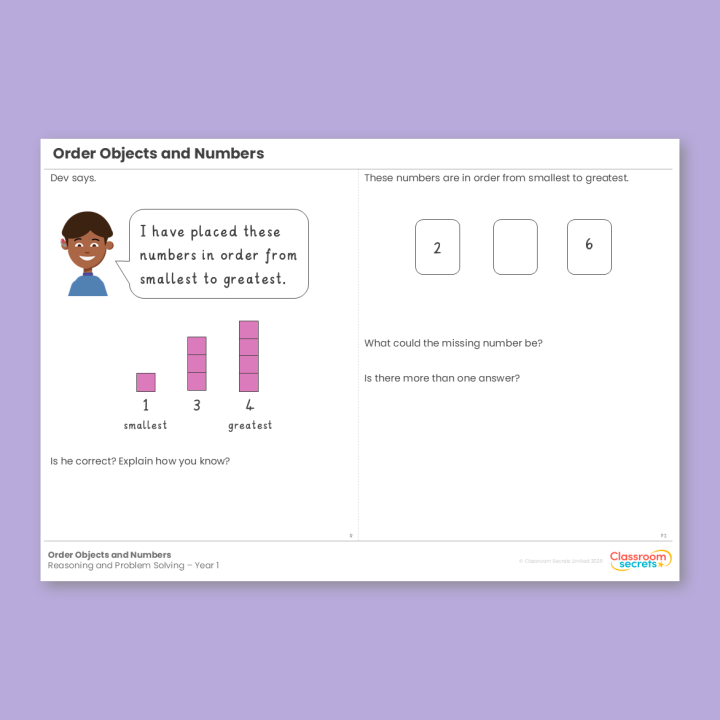
• Q1: Reasoning - explaining if three numbers have been ordered from smallest to greatest.
• Q2: Problem Solving – finding what the missing number could be with multiple answers.
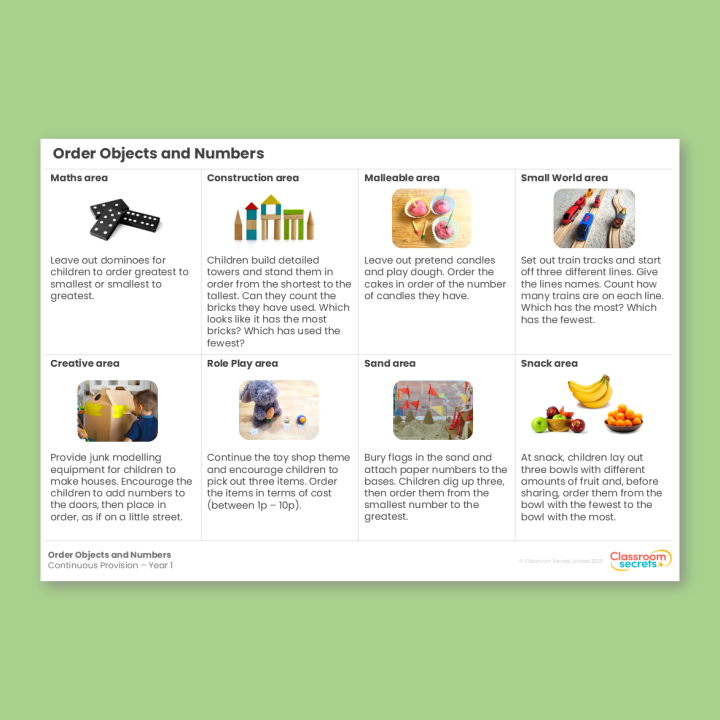
Continuous Provision
• Maths area - order dominoes from smallest number to the greatest.
• Construction area - build towers and order from shortest to tallest.
• Malleable area - order the cakes by how many candles they have.
• Small World area - count the trains on three lines and order them.
• Creative area - number the doors on junk-model houses and order them.
• Role Play area - order three shop items by cost.
• Sand area - dig up three numbered flags and order them.
• Snack area - order three bowls of fruit from fewest to most.