Key Stage 1|Year 1|Maths|WR Maths Aligned|Place Value (within 10)|Sort Objects
White Rose Maths aligned scheme of work – Year 1
01 Sort Objects
Lesson resources
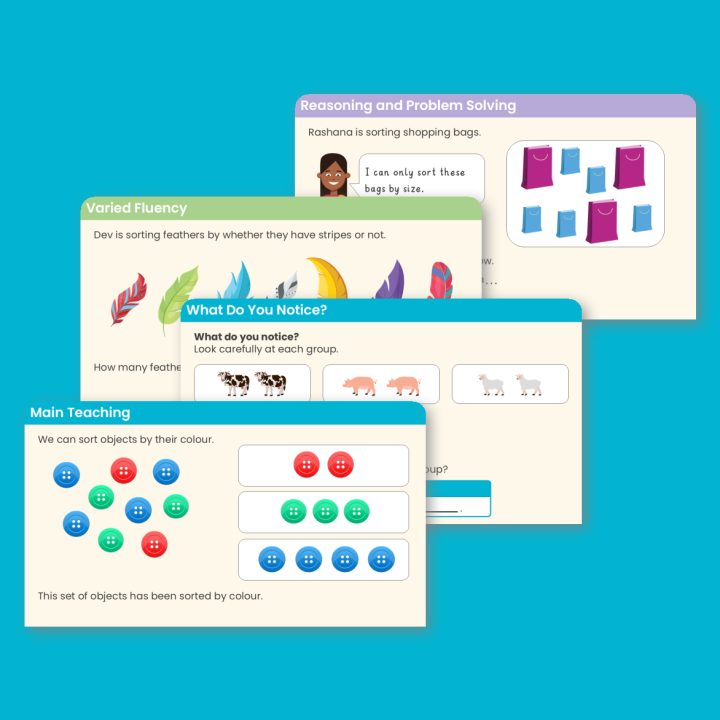
Introduce the concept, model the learning and build understanding together.
Additional resources
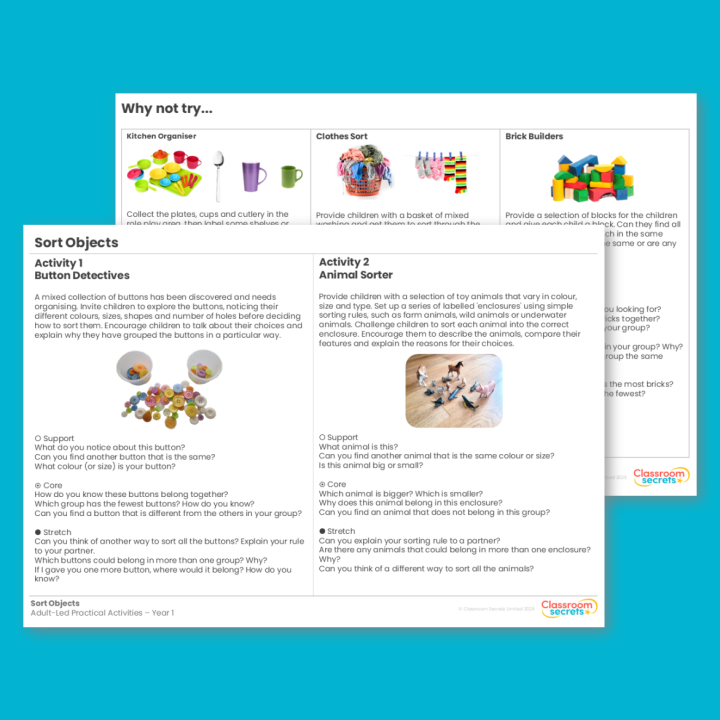
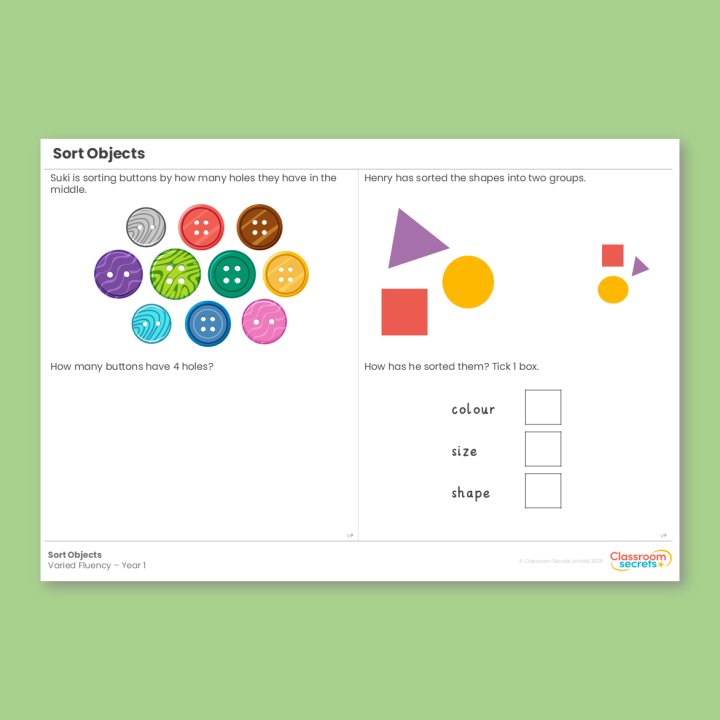
Practise, apply and secure the learning, adapting support and challenge where needed.
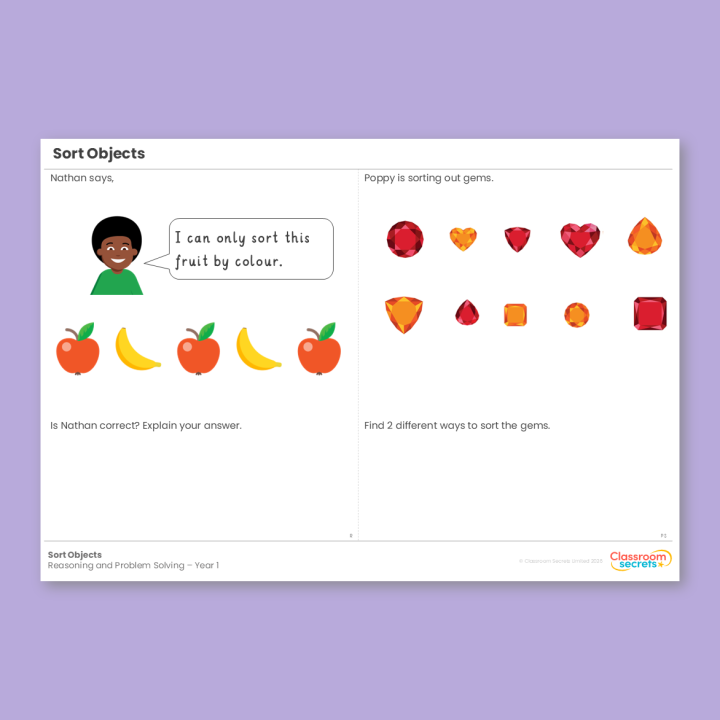
Additional resources
Develop deeper mathematical thinking through reasoning, discussion and making connections.
Additional resources
Block extras
Resources that support the whole block, the same across every lesson in Place Value (within 10).
This lesson is designed to align to White Rose Maths version 3. Classroom Secrets Limited is not affiliated with, endorsed by, or in any way connected to White Rose Education Limited. Our products are original to Classroom Secrets Limited and any reference to White Rose Maths is solely for the purpose of indicating compatibility and does not imply any association with White Rose Education.