Resource GuideMaths
Our new 2026/27 maths lessons are aligned with the White Rose Maths Version 3 small-step progression, taking children from clear teaching and guided practice through fluency, reasoning and deeper thinking. Each lesson draws on current EEF and NCETM guidance, with checks for understanding and resources to help you respond when children need more support or are ready for greater challenge.
How our new maths lessons work
The resources work together in a clear sequence. The PowerPoint teaches the new concept, Varied Fluency helps children secure it (including the right adaptive teaching resources where needed), and Reasoning and Problem Solving develops their ability to use and reason with what they have learned. Deeper tasks then take secure understanding further.
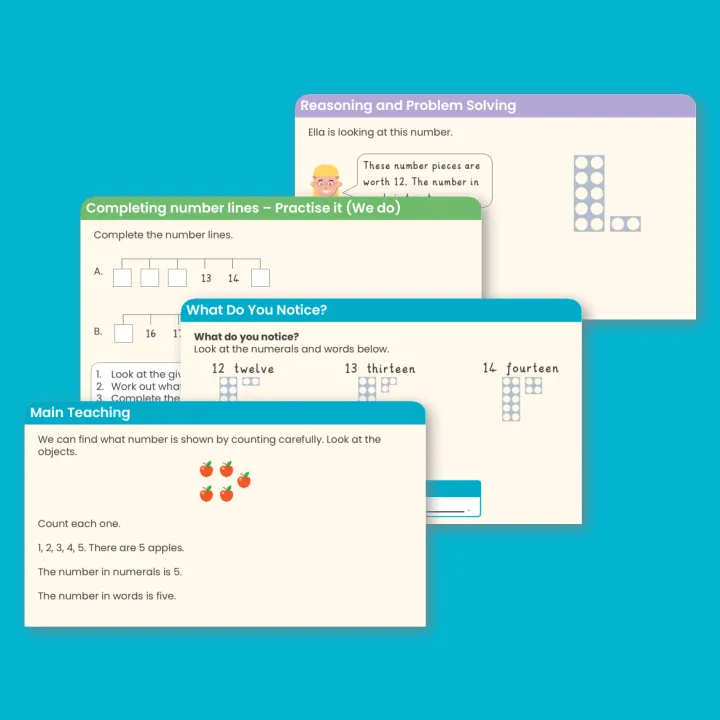
Teaching and Modelling PowerPoints
Our editable Teaching and Modelling PowerPoints guide the first part of each lesson, from prior learning through to independent practice. Children connect maths to real-world contexts and explore a What do you notice? prompt to encourage mathematical talk and surface misconceptions. New learning then follows our Model → Practise Together → Your Turn approach, with checks for understanding throughout and an exit task to help you decide what needs to happen next.
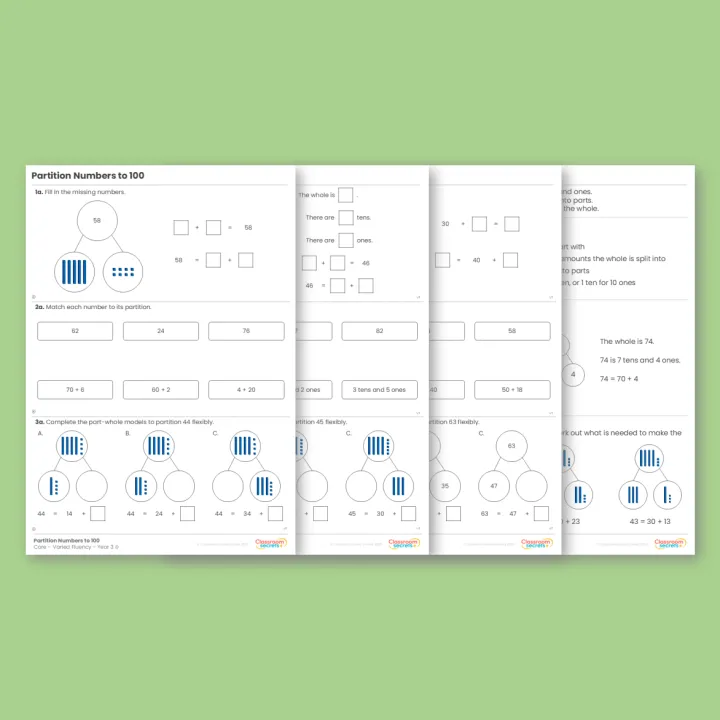
Varied Fluency
Varied Fluency is the first core independent task, with carefully sequenced questions that help children notice structure, make connections and become fluent with the new mathematics. Most children begin with Core. Support and Stretch are there when formative assessment shows a child needs more structure or greater complexity. Scaffolded Examples and Knowledge Organisers add further options for in-lesson support, small-group work, same-day intervention or pre-teaching.
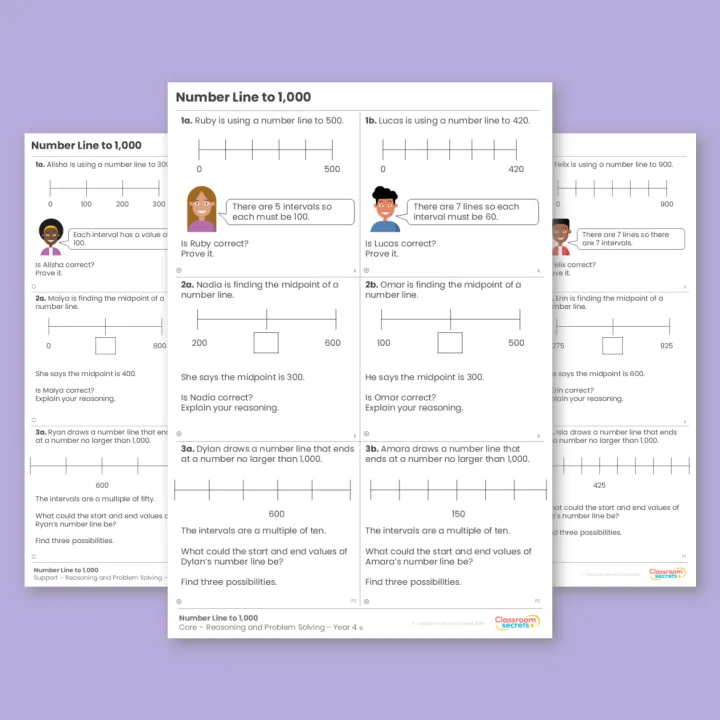
Reasoning and Problem Solving
Reasoning and problem solving is a skill every child needs opportunities to develop, not an extension for the quickest children. Our tasks ask children to apply their learning, explain, justify, compare, spot errors and solve less familiar problems. Most children begin with Core, while Support keeps the reasoning accessible when extra structure is needed and Stretch increases the complexity for children who are secure.
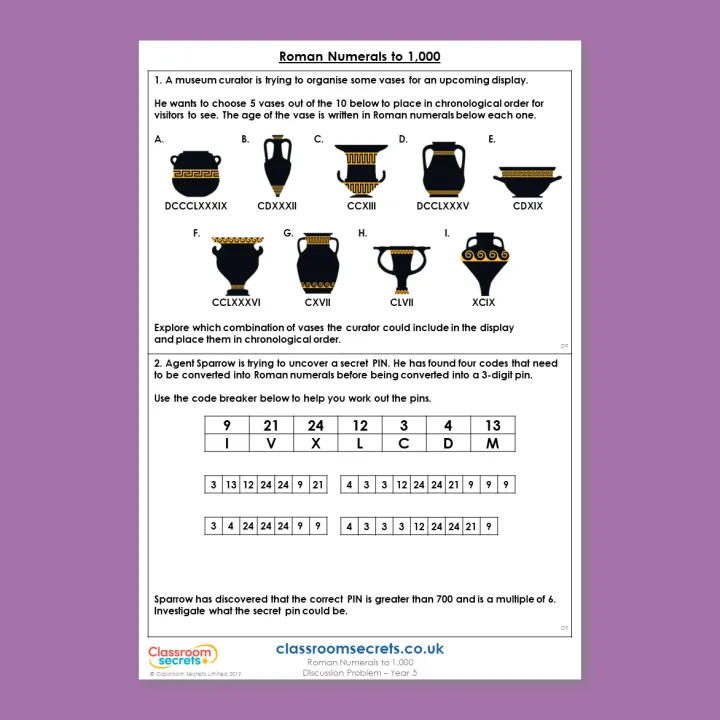
Deeper Reasoning and Discussion Problems
When the core learning is secure, Deeper Reasoning and Discussion Problems take the mathematics further without simply moving children on to new content. Tasks ask children to make connections, investigate, generalise, explain and justify, while Discussion Problems create rich opportunities for mathematical talk.
More maths resources
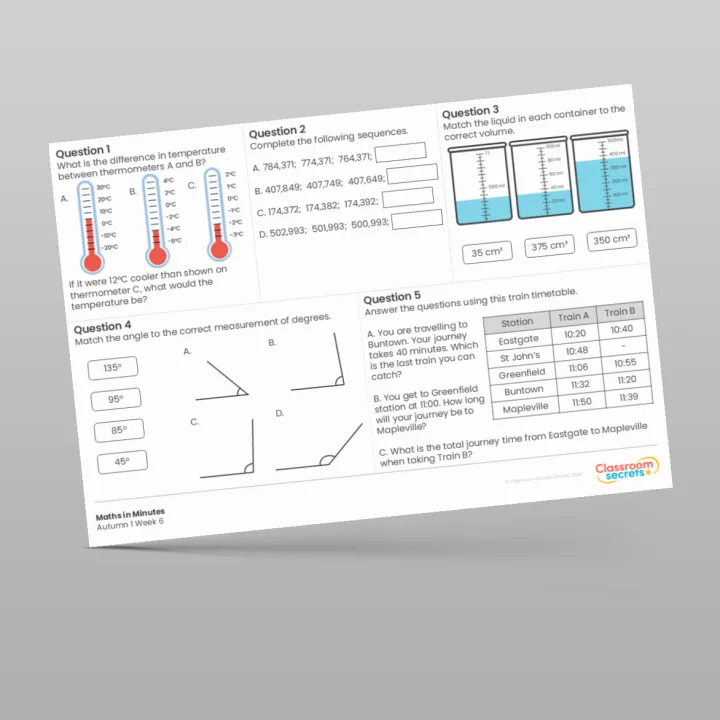
Alongside the main lesson sequence, our wider maths library includes Practical Activities, Rapid Arithmetic, Maths in Minutes, Fluency Matrix, Stem Sentences, Homework and Displays. These resources help you revisit prior learning, build fluency, support mathematical talk and provide extra practice when it is needed, with each designed for a clear purpose across the maths week.
Looking for our established maths resources?
Our new 2026/27 lessons are aligned with the White Rose Maths Version 3 small steps. Established Classroom Secrets resources remain available alongside them when you want an alternative activity, additional practice or an earlier resource from our maths library.
Explore Classroom Secrets Maths
Explore our new White Rose Maths Version 3-aligned lessons for 2026/27, with teaching, fluency, reasoning and adaptive support designed to work together throughout the lesson.