x1
Select a tag to view relevant resources
Uses of Everyday Materials
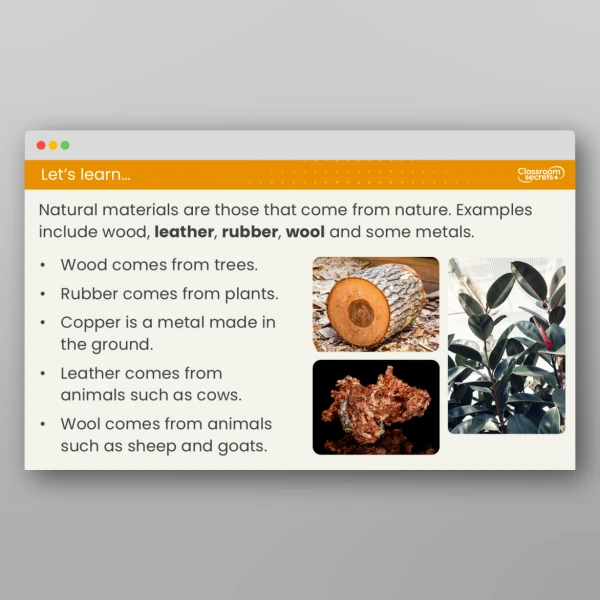
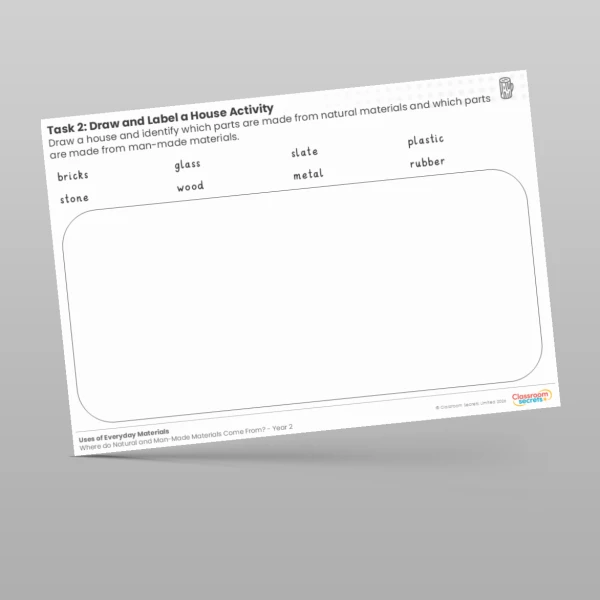
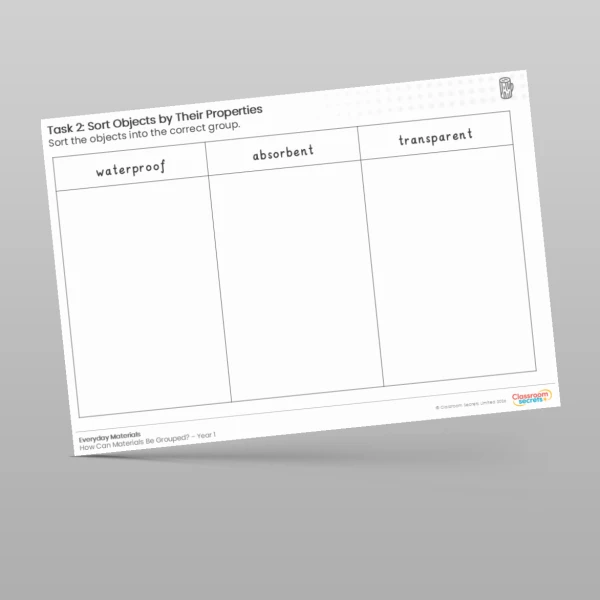
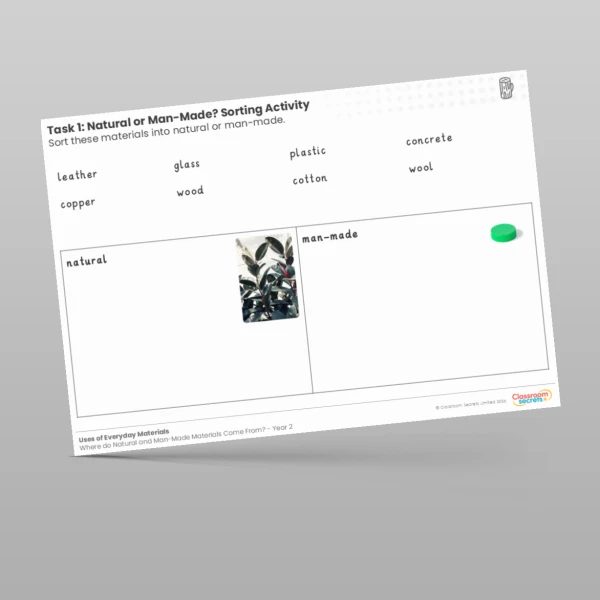
This Year 2 Natural or Man-Made Sorting Activity Worksheet gives pupils the opportunity to demonstrate their understanding of the difference between natural and man-made materials. There are two versions of this resource to meet the needs of all your children. This activity could be done independently or as part of a paired task. There are lots of opportunities for discussion too! This activity follows on perfectly from our Year 2 Where Do Natural and Man-Made Materials Come From? PowerPoint Lesson. Get downloading!
National Curriculum Objective:
identify and compare the suitability of a variety of everyday materials, including wood, metal, plastic, glass, brick, rock, paper and cardboard for particular uses
Select a tag to view relevant resources
Uses of Everyday Materials