What’s Wrong with Three-Way Differentiation in Primary Maths?
24th August 2026
Written by Lee Peckover
Opening with a weird answer: There is nothing inherently wrong with having three versions of a maths task.
Sometimes one child needs more structure. Perhaps another is ready to work independently. And maybe another child has the knowledge secure and needs more complexity.
The problem with three-way differentiation comes when those three resources become three fixed pathways through the lesson and do not neatly split for the actual thing children need support with. Sometimes we quickly differentiate or fall into a pattern of downloading 3-way differentiated resources that are the equivalent of “easy, medium, hard” – these don’t address any actual barriers to learning.
It can end up looking like: Lower group gets this. Middle group gets that. Higher group gets the other one.
We know why this happened. Teachers are overworked and short on time. We all want the best for the children we teach. The best is really teachers who are not overworked and burnt out. Three-way differentiation gave teachers a fairly manageable way to show that they were catering for different needs without writing 30 individual lesson plans. It worked for getting somewhere closer to what we really wanted, but we all knew it wasn’t optimum.
But what looks neat on a planning document does not always work quite so neatly for the children doing the maths.
The same children can get stuck on the same track
Ofsted’s 2023 mathematics subject report discusses the move away from what it calls the previously widespread use of “3 levels of differentiation”.
One problem inspectors identified was that children could be given different mathematical experiences according to the group they were in. Some repeatedly completed more basic work, while others were the ones who reached reasoning and problem solving (Ofsted, 2023).
If a child always starts with less demanding work, they have less chance to show that they are ready for something harder.
And if reasoning is only accessed when children have secured everything at “expected”, children who need a bit more support with fluency can miss out on reasoning altogether.
The label starts making the decision before the child has had the chance to.
But some children really do need easier work
Yep. We know this, and we’re not saying otherwise. This is where the conversation can become a bit silly if we are not careful. Moving away from fixed differentiation does not mean refusing to make work easier when a child needs it.
A child might need a simpler set of numbers while learning a new method. They might need a task broken down further, more examples to copy from or a few extra questions to secure something they have missed.
For some children, that might last five minutes. For others, considerably longer.
Ofsted also recognises that pupils working significantly below age-related expectations may sometimes need different content altogether (Ofsted, 2023).
So, the issue is not whether work can ever be different or “easier” (I prefer “adapted to meet a need” here).
It is whether we decide what a child needs from what they are showing us now, or from a group they were put into weeks ago.
A better use for three resources
You can still have three resources if it helps. The difference is in how they are used.
You might begin with the same teaching and modelling for the class, then check what children have understood.
Most may be ready to move into the main task, a few may need a little more support first, some may already be secure enough to work with greater complexity.
Those children might end up using three different resources. But they have arrived there because of what happened in the lesson. Tomorrow, the picture might be different. It might even change mid-lesson. That is much closer to adaptive teaching. It might also mean more than 3 sheets. Sometimes it might be one of those plus a knowledge organiser, or it might mean more examples, then a sheet.
For our own resources, it could look like this:
Fixed three-way differentiation
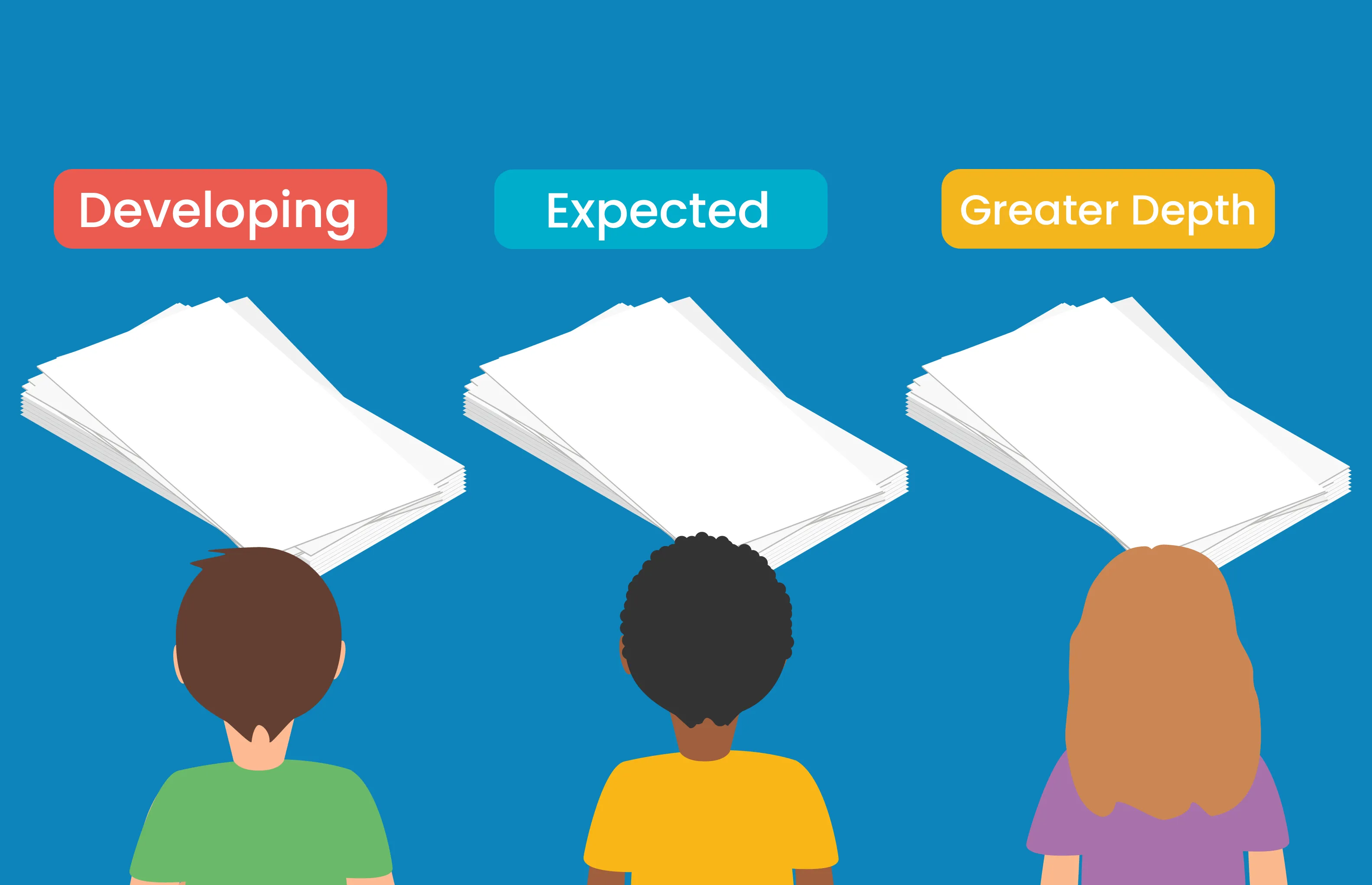
Group decided before lesson → Developing / Expected / Greater Depth → same children regularly follow same route
Adaptive use of resources
Teach → check understanding → choose Support / Core / Stretch as needed (or one of our other adaptive resources in the VF pack – or alongside one of them) → check again
No coloured ability groups or children permanently placed into lanes.
This is why labels matter, too
Developing, Working Towards, Expected and Greater Depth all carry the risk of sounding like descriptions of the child.
“Jamie is Working Towards, so give him the Working Towards sheet.”
That may not be what anyone intends, but it is an easy habit to fall into.
Working Towards and Greater Depth belong in assessment conversations. They are not levels of worksheet. At Classroom Secrets, we have moved to Support, Core and Stretch for our new maths resources.
Core is the main route through the learning.
Support is there when a child needs more help. That might mean greater structure or a temporary reduction in demand while something is secured. We also have wider resources than just a worksheet here – have a look in our new VF sheets to find these.
Stretch is there when the important knowledge is secure and greater complexity is appropriate.
The labels describe what the resource offers. They do not describe the child.
The aim is not less differentiation
It is better differentiation.
Teachers still need options. A class of 30 children will never all need exactly the same thing at exactly the same moment.
But we can stop assuming that the answer is to decide three groups in advance and keep children in them.
Teach first. See what happens. Then use the right resource for the child in front of you.
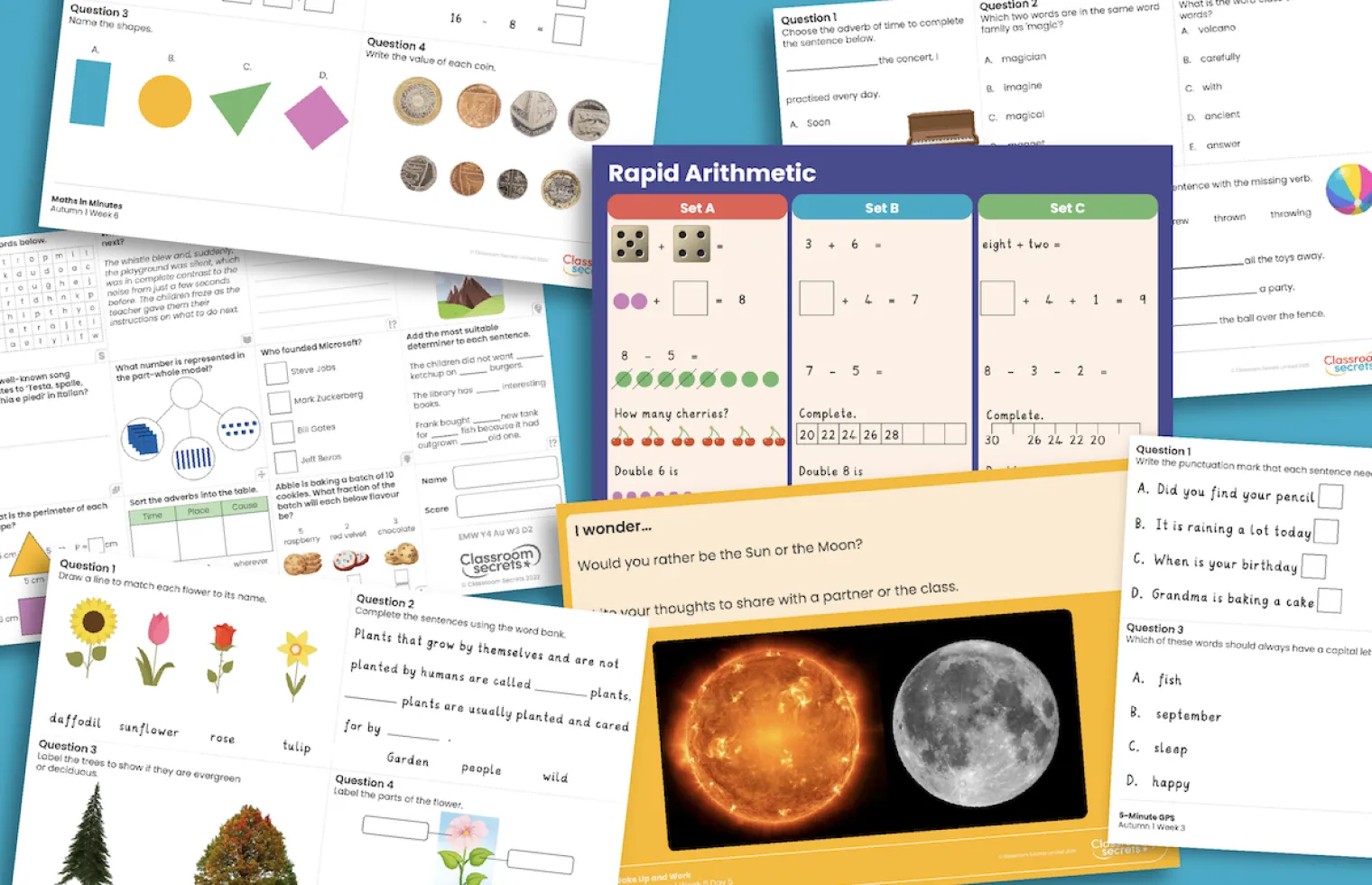
You can see how Support, Core and Stretch work in our new adaptive maths lessons here:
https://classroomsecrets.co.uk/campaign/new-adaptive-maths
References
Department for Education. (2024). Initial teacher training and early career frameworkDepartment for Education.
Eaton, J. (2022, October 19). Moving from ‘differentiation’ to ‘adaptive teaching’Education Endowment Foundation.
Ofsted. (2023). Coordinating mathematical success: The mathematics subject reportOfsted.
Try us today!