x1
![An image of the [object Object] Resource](https://d52m8jhkbaeog.cloudfront.net/featured-images-lq/113d484a789f34e398a9fa62fe63f756ea8337c0/113d484a789f34e398a9fa62fe63f756ea8337c0.webp)
Select a tag to view relevant resources
Uses of Everyday Materials
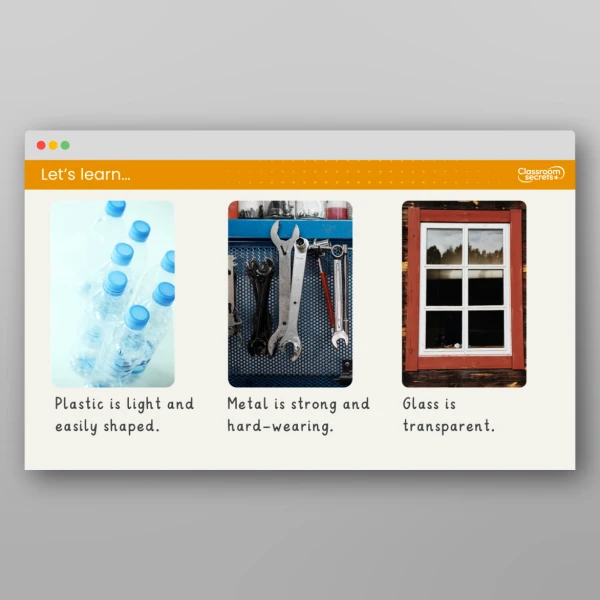
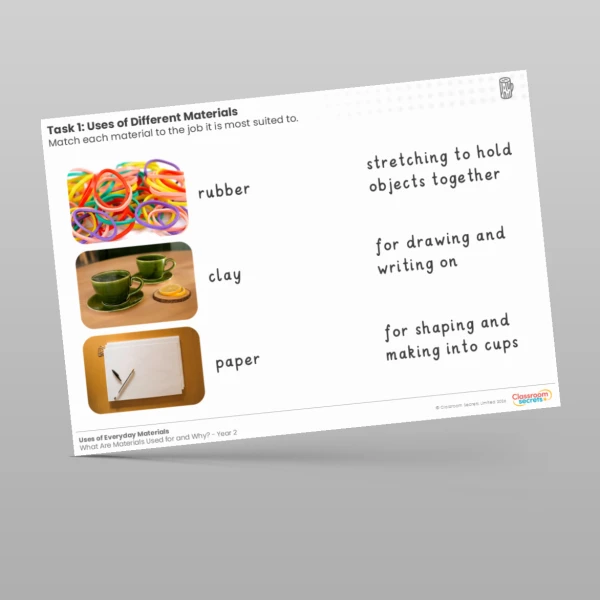
Help your pupils to understand more about why different materials are used to build different objects with this Year 2 Why Do we Use Different Materials for Different Objects? 2 Investigation Lesson. They will consider why the properties of materials make them suitable, or not, for making different objects, with a particular focus on insulation.
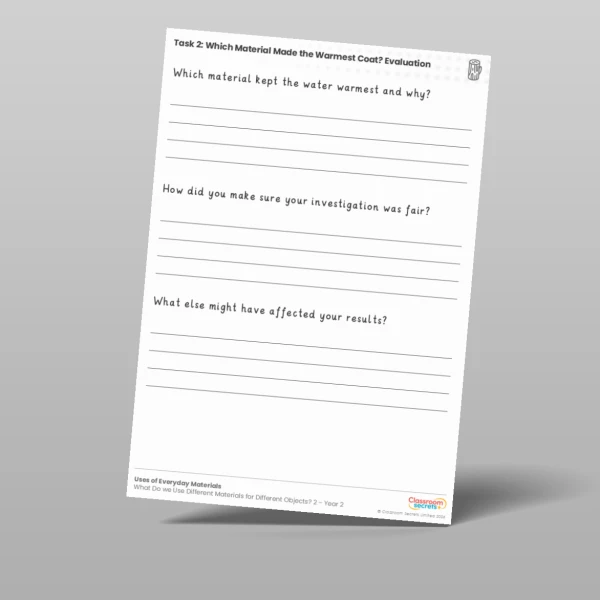
In this Year 2 investigation lesson, pupils will recap why a soft fabric is best to use when making a blanket, then engage in a practical investigation to observe which materials have the best insulation properties for making a winter coat. They will record findings in a table and create a graph to draw scientific conclusions from their fair test.
National Curriculum Objectives:
Identify and compare the suitability of a variety of everyday materials, including wood, metal, plastic, glass, brick, rock, paper and cardboard for particular uses.
Select a tag to view relevant resources
Uses of Everyday Materials