x1
![An image of the [object Object] Resource](https://d52m8jhkbaeog.cloudfront.net/featured-images-lq/76c1d959099162146c05b963eb77fd24c39fc8d2/76c1d959099162146c05b963eb77fd24c39fc8d2.webp)
Select a tag to view relevant resources
Speaking
Listening, Attention and Understanding
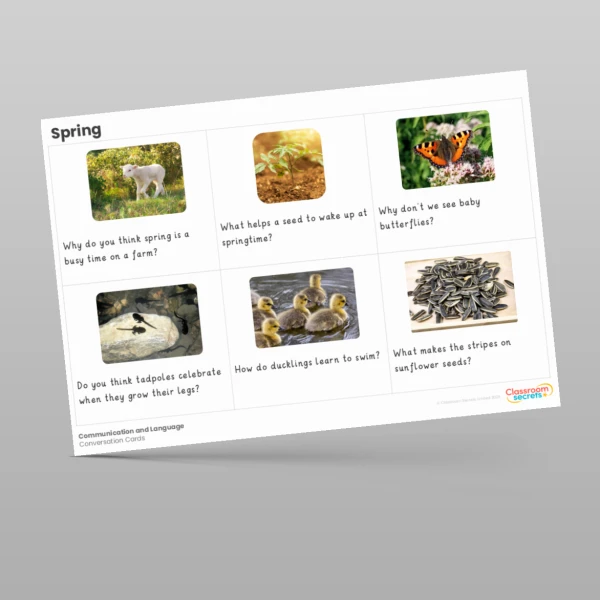
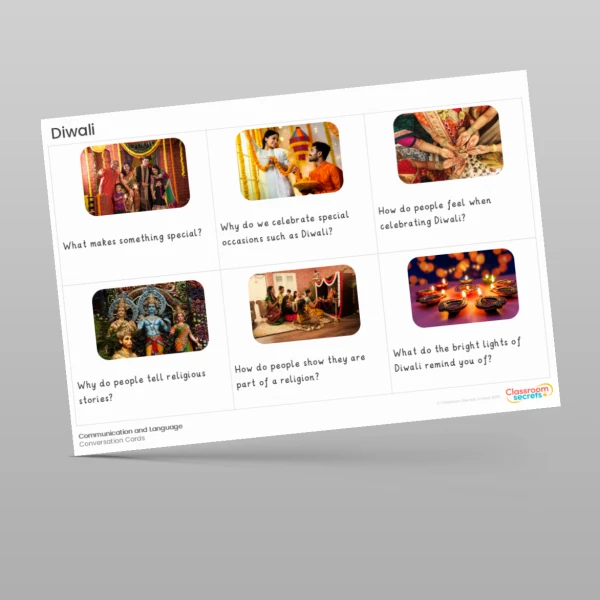
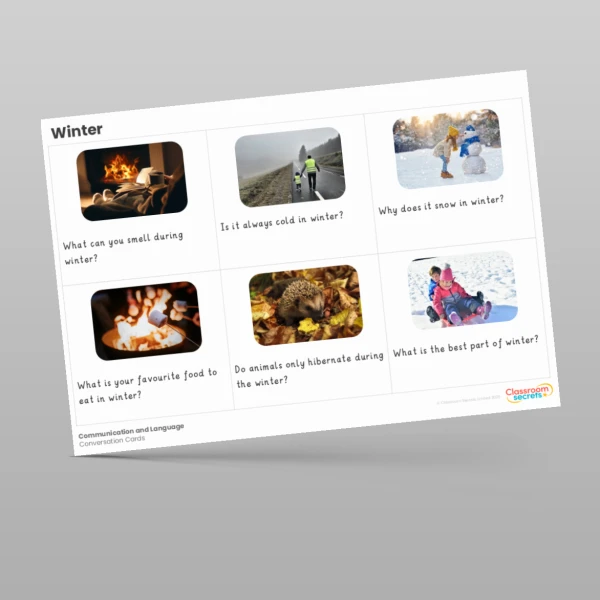
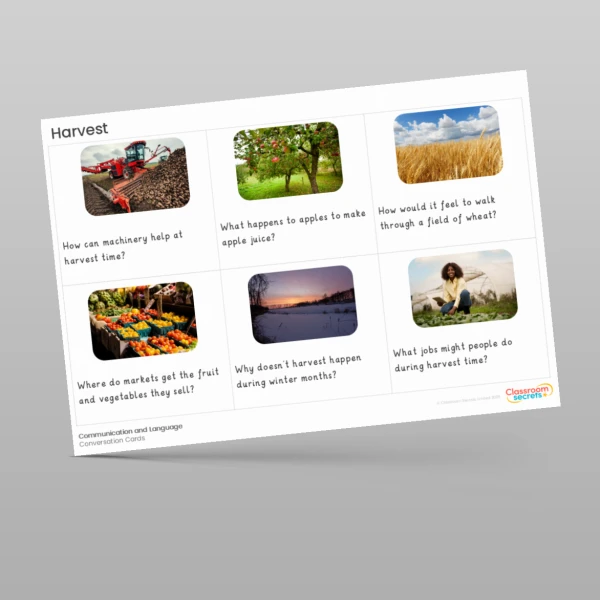
EYFS Plants Conversation Cards give you a ready-made bank of open questions that get young children talking, listening and thinking aloud. Each card pairs a question with a photograph, so children who are not yet reading can choose a card that interests them and join the discussion. The content includes 18 picture cards and a printer-friendly version, covering what happens under the soil, how plants know which way to grow, trees through the seasons and vegetables growing in the garden. They make ideal plant talk prompts and speaking and listening activities, developing children's communication and language skills and oracy.
Every card supports the Early Learning Goals for Listening, Attention and Understanding and Speaking, and the questions also link to Understanding the World: The Natural World. Children's answers make useful observations to inform your ELG judgements.
The EEF Early Years Toolkit rates communication and language approaches at about +7 months' additional progress, at very low cost.
Questions about what plants need and how they grow, such as "How does a plant know which way to grow?"
Questions about how plants change with the seasons, such as "What changes do you see on trees throughout the year?"
Playful questions that invite children to imagine, such as "If a flower could talk, what would it say?"
Our conversation cards work well as snack time conversation starters or as part of a designated time for group discussion. Every question is written for you, so they're ready to print, cut and use. Children pick a picture that interests them, you read the question aloud, and the group discusses it. The questions are open by design, so there's no right answer to find: the aim is talk, reasoning and vocabulary. You can also use them:
Stretch confident talkers with follow-up prompts such as "What makes you think that?" and "What would happen if...?", or simplify by narrowing an open question to a choice (e.g. "Flowers or vegetables?").
The photographs give every child a visual hook, so children can point, gesture or use single words before building to sentences. Pair the cards with Makaton or visuals your setting already uses. These simple approaches can also help:
You can explore more of our conversation cards resources here.
Select a tag to view relevant resources
Speaking
Listening, Attention and Understanding