x1
![An image of the [object Object] Resource](https://d52m8jhkbaeog.cloudfront.net/featured-images-lq/83783ad20d85518ed3d13f5b54b25582490eda10/83783ad20d85518ed3d13f5b54b25582490eda10.webp)
Select a tag to view relevant resources
The Natural World
Speaking
Listening, Attention and Understanding
Autumn
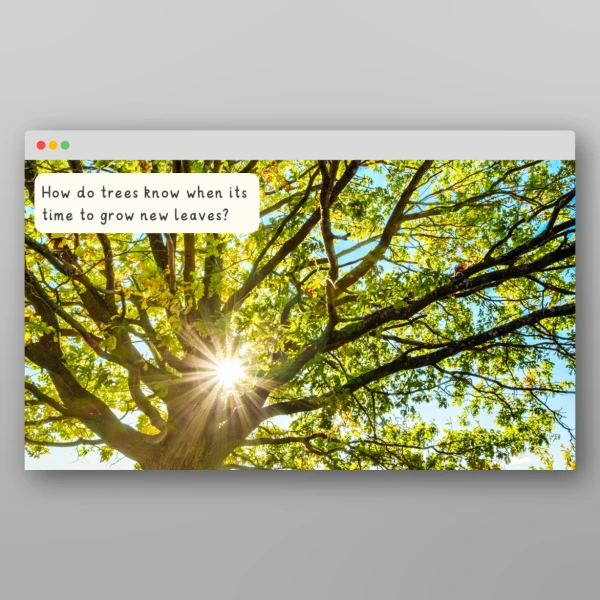
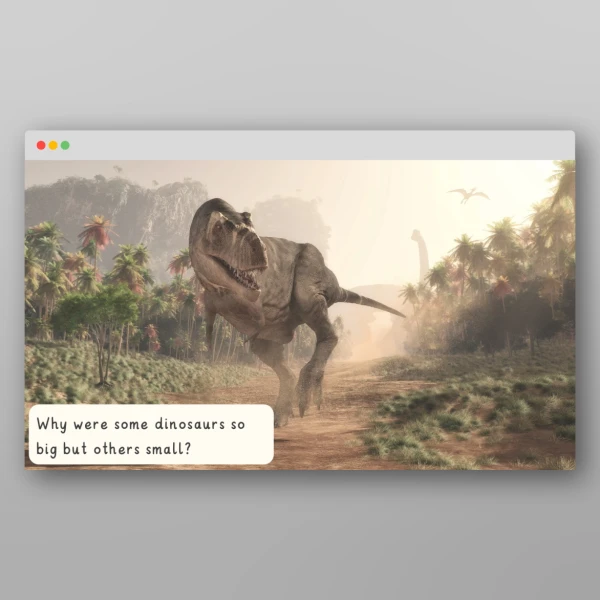
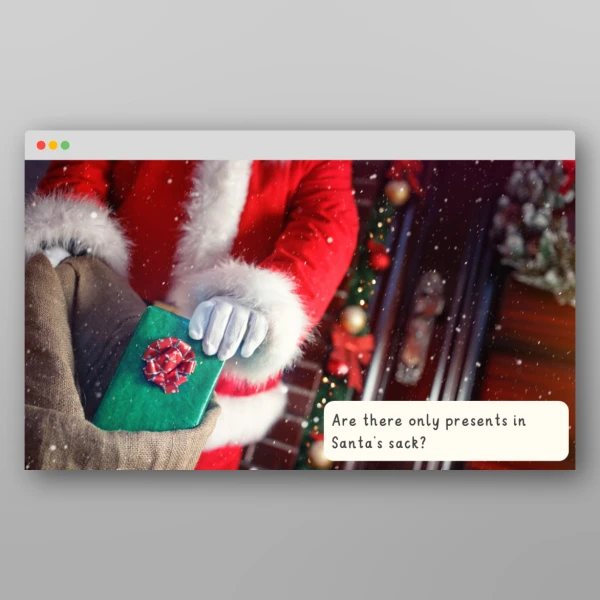
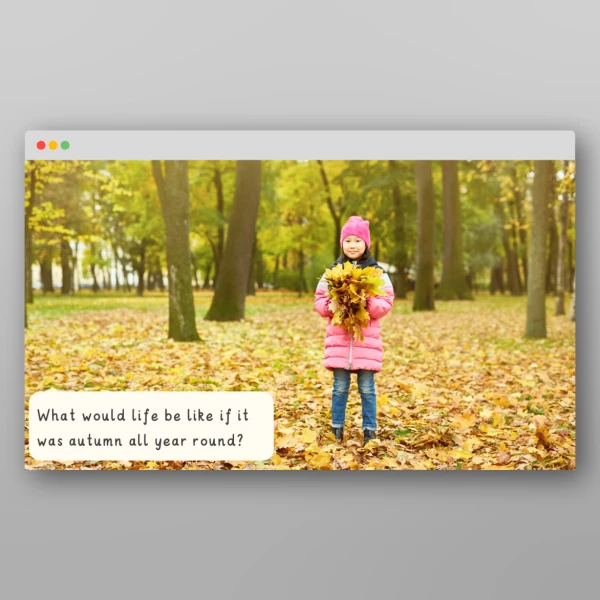
EYFS Winter I Wonder Discussion Prompts get children thinking and wondering out loud. Each slide shows one full-screen photograph with a single big question, and the slide notes give you follow-up questions and background facts, so any adult can lead a rich discussion with no preparation. The content includes a PowerPoint with 8 discussion prompts and an adult guidance slide, covering how winter feels, snowflakes, building with snow, snowy places, hibernation, icy roads and the signs of winter. They make ideal winter talk prompts and a carpet-time hook for your winter topic, developing children's communication and language skills and oracy.
Every slide supports the Early Learning Goals for Listening, Attention and Understanding and Speaking, and the questions also link to Understanding the World: The Natural World. Children's answers make useful observations to inform your ELG judgements.
The EEF Early Years Toolkit rates communication and language approaches at about +7 months' additional progress, at very low cost.
Questions about winter weather, such as "What makes a snowflake?"
Questions about how animals cope with the cold, such as "Why do some animals hibernate and others not?"
Questions about how winter changes the world around us, such as "How is winter different from other seasons?"
Every slide comes with follow-up questions in the notes, such as "Why don't humans hibernate?", and some include background facts for the adult, such as why every snowflake is unique.
Our I Wonder discussion prompts are a teacher-led PowerPoint for the interactive whiteboard. Show a slide, read the question aloud, give children thinking time, then use the slide notes to extend the discussion. Open the slides in Presenter View so you can see the notes while the class sees only the photo and question. The questions are open by design, so there's no right answer to find: the aim is talk, reasoning and vocabulary. You can also use them:
Try showing the photograph first and asking "What can you see? What do you wonder?" Stretch confident talkers with the follow-up questions in the notes, or simplify by narrowing an open question to a choice (e.g. "Warm or cold?"). Record children's own "I wonder" questions on a Wonder Wall and return to them through books, play and research.
The full-screen photographs give every child something to talk about, so children can point, gesture or use single words before building to sentences. Pair the slides with Makaton or visuals your setting already uses. These simple approaches can also help:
Pair these slides with our Winter Conversation Cards for small-group talk: the I Wonder prompts give the whole class one big question at a time, while the cards offer lots of shorter questions for children to choose from.
You can explore more of our I Wonder discussion prompts here.
Select a tag to view relevant resources
The Natural World
Speaking
Listening, Attention and Understanding
Autumn