x1
Select a tag to view relevant resources
Autumn
Spring
Summer
Safer Internet Day
E-Safety
Science Events
Engineers Week
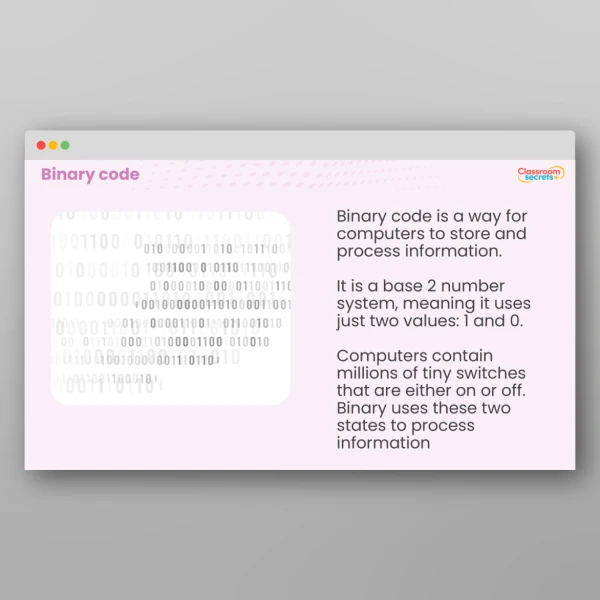
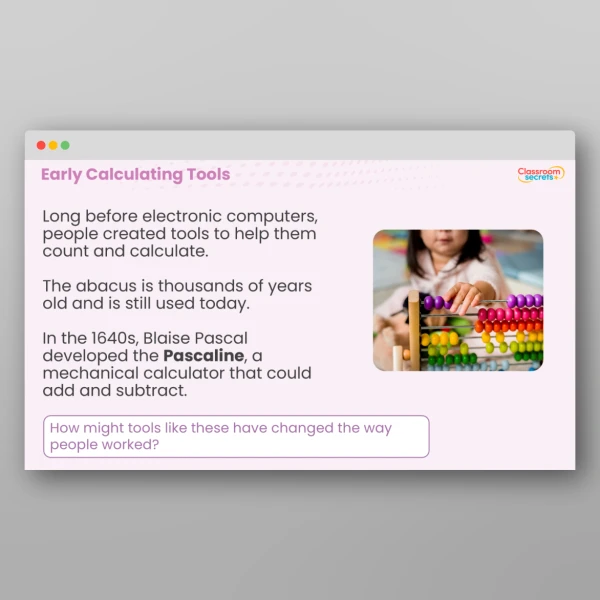
This KS2 History of Computers Teaching PowerPoint takes primary pupils on a journey through the history of computing, from early calculating tools such as the abacus to today’s smartphones and artificial intelligence. It’s ideal for computing, history or topical events lessons.
The 14-slide presentation opens with an illustrated timeline of key milestones. It then explores the people and inventions that shaped modern technology, including Blaise Pascal’s Pascaline, Charles Babbage’s Analytical Engine and Ada Lovelace, often described as the world’s first computer programmer. Pupils also learn about Colossus, one of the world’s first electronic computers, which helped codebreakers at Bletchley Park during the Second World War. Later slides cover the move from valves to transistors, the rise of personal computers, Tim Berners-Lee’s invention of the World Wide Web, smartphones, coding and AI.
Discussion questions throughout encourage pupils to think about how technology has changed the way people live, work and communicate. Teacher notes support each question. The final slide offers five follow-up activities: writing code, designing an invention, an AI debate, a screen-free poster and a “then and now” comparison.
Select a tag to view relevant resources
Autumn
Spring
Summer
Safer Internet Day
E-Safety
Science Events
Engineers Week