x1
Select a tag to view relevant resources
Autumn
Spring
Summer
Science Events
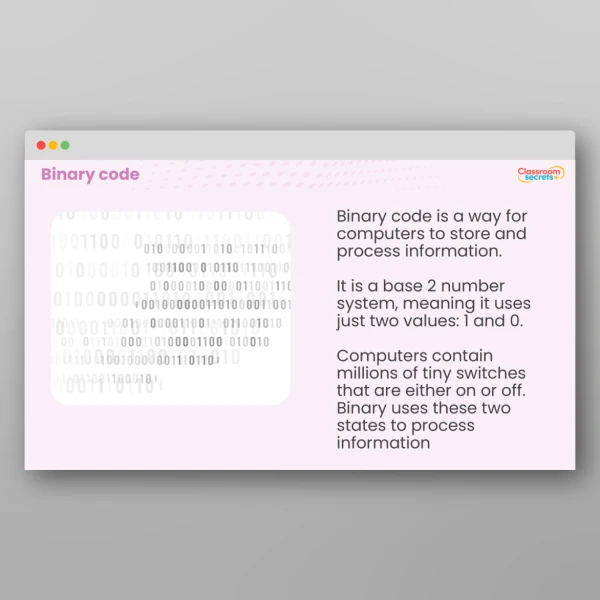
This KS2 Binary Coding PowerPoint introduces pupils to the code computers use to store and process information. Binary is a base 2 number system that uses only two digits, 0 and 1, matching the on and off states of the tiny switches inside every computer.
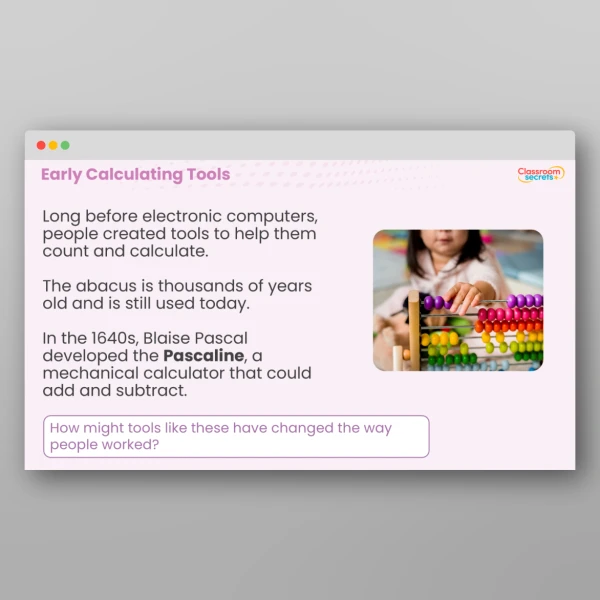
The 14-slide presentation starts with how computers have changed over time. It then shows how binary is used to store text, images and sound. Pupils learn to:
write the numbers 0 to 10 in binary and spot the doubling pattern
create binary calculations for a partner to solve
decode capital letters using a full A to Z binary alphabet table
write secret messages in binary
design a binary pixel image, with a worked example and a reveal slide to model the task
discuss and debate statements about binary in a final reasoning challenge
Answers are revealed on follow-up slides, so the presentation works for whole-class teaching. Teacher notes give subject knowledge support, such as explaining binary place value (8, 4, 2, 1) and why six colours need three-digit codes. This makes the resource accessible for teachers who are new to the topic.
It’s ideal for computing lessons, STEM weeks and themed events. It also links to place value and number patterns in maths.
Select a tag to view relevant resources
Autumn
Spring
Summer
Science Events