x1
Select a tag to view relevant resources
Spring
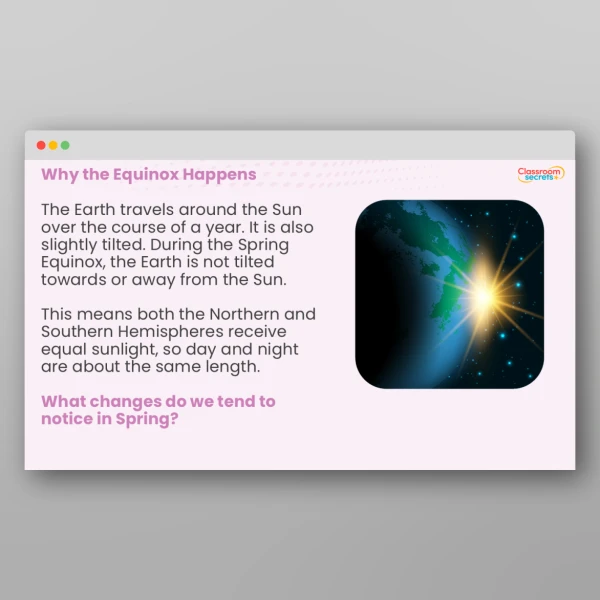
Spring Equinox Whole School Assembly PowerPoint is a slideshow that explains why day and night are about the same length in March and how different cultures celebrate the return of spring. The content includes 10 slides with teacher notes, covering what the Spring Equinox is, why it happens, a time of change, Nowruz, Ostara, balance in nature and in our own lives, new beginnings and a reflection. It links to science learning about seasonal changes.
How the Earth's position means both hemispheres receive equal sunlight around 20th March, giving about 12 hours of daylight and 12 hours of darkness, opening with "Have you noticed the days getting lighter?"
The Persian New Year festival of Nowruz, with its Haft-Seen table of seven symbolic items, and the ancient European spring festival of Ostara, with the question "Which spring festival does Ostara remind you of?"
What the word equinox means and how spring can be a fresh start for us too, with learning, friendship, wellbeing and kindness goals and the question "Why is balance important for our wellbeing?"
Our whole school assemblies are PowerPoint slideshows that follow a similar structure: an introduction, questions to get children thinking, the key points of the topic and reflection time. They're paced to suit a primary school assembly and work best on a whiteboard, projected out to the hall. You can use them:
The majority of our assemblies include teacher notes and guidance to support delivery, and because they're pacey, you can adapt them to however long your assembly lasts.
Every assembly is editable, so you can add, remove or change slides to suit the needs of your school. We cover religious events, seasonal topics, values such as kindness, friendship and tolerance, science, history, PSHE, music, significant people and sporting events, so you can choose the assemblies that fit your school year.
Families can carry the conversation on at home by asking children about their assembly: what they heard, how it made them feel and what they think about it.
You can explore more of our whole school assembly resources here.
Select a tag to view relevant resources
Spring