x1
Select a tag to view relevant resources
Autumn
Spring
Summer
Science Events
Engineers Week
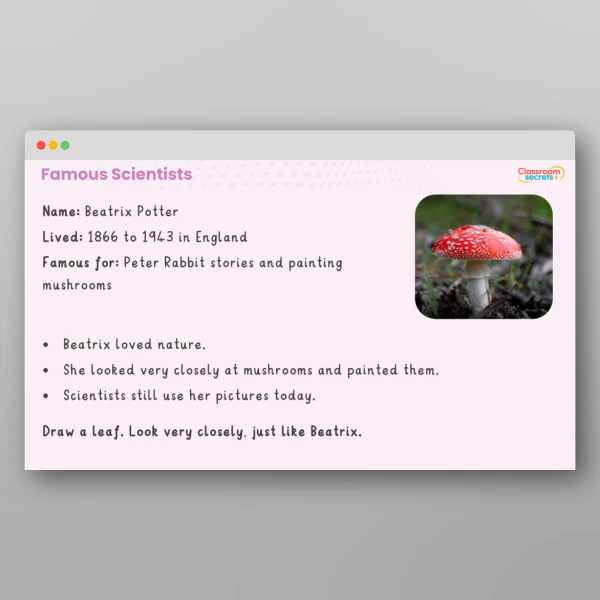
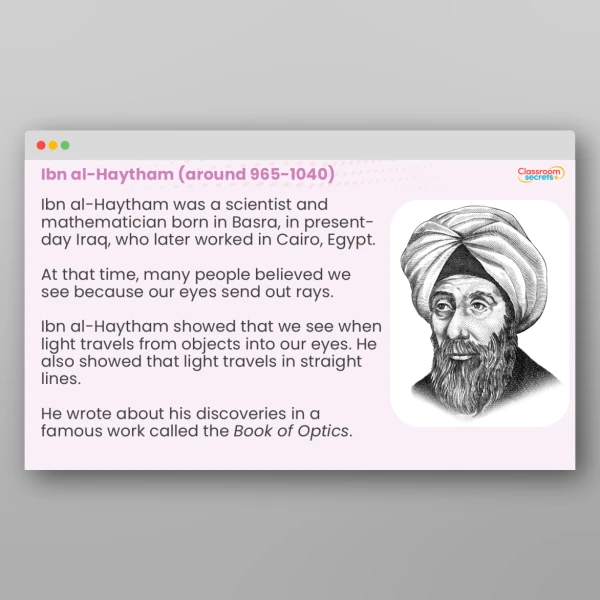
Spark curiosity about the people behind big scientific discoveries with this Scientist of the Day PowerPoint for Years 3 and 4. The presentation introduces five scientists from different times and places around the world: Mary Anning, Jagadish Chandra Bose, Ibn al-Haytham, Dr Jane Goodall and Christine Darden. Each scientist has two slides. The first is a child-friendly introduction to their life and key discoveries. The second has an “I wonder…” question to prompt discussion and a practical “Try it!” activity that pupils can complete in class.
The activities link closely to the Year 3 and Year 4 science curriculum and help develop working scientifically skills. Pupils make trace fossils in clay (rocks and fossils), compare cress grown in light and dark conditions as a fair test (plants), build a pinhole viewer (light), observe minibeasts or birds in the school grounds (living things and their habitats) and investigate how well different materials muffle sound (sound). The slideshow works well as a daily starter across a week, with one scientist each day, or as part of a science lesson, assembly or themed event.
This resource is ideal for marking World Science Day for Peace and Development on 10 November. The day celebrates the role of science in society and the importance of science being shared by everyone. The five scientists come from England, India, the Middle East and the USA, and their work spans thousands of years, so pupils can see that great scientific thinking comes from many cultures and backgrounds. Jane Goodall’s conservation work can lead into talk about how science helps protect our planet. The stories of Mary Anning and Christine Darden, whose contributions were not always recognised, can open discussion about fairness and who gets to be a scientist.
The presentation also fits naturally into British Science Week in March, which encourages hands-on investigation and celebrates science, technology, engineering and maths. The “Try it!” activities make simple, low-cost practical investigations that could run across the week. Pupils could then share their findings in a class display or a science showcase for parents. The “I wonder…” questions are also great prompts for pupils to plan their own investigations during the week.
Select a tag to view relevant resources
Autumn
Spring
Summer
Science Events
Engineers Week