x1
Select a tag to view relevant resources
Autumn
Spring
Summer
Science Events
Engineers Week
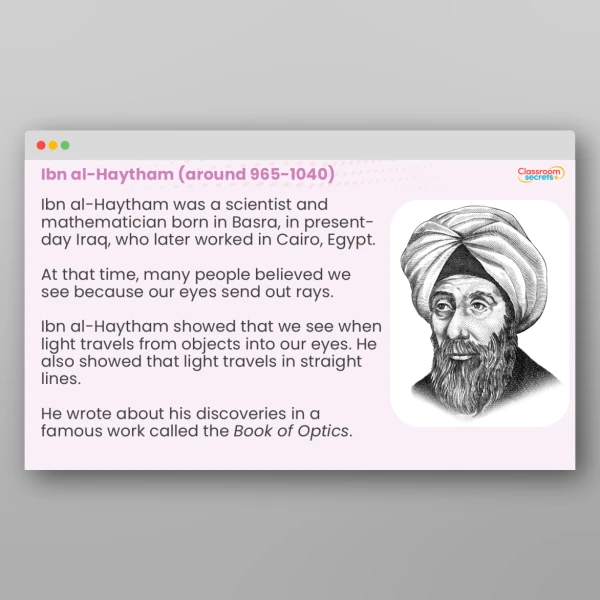
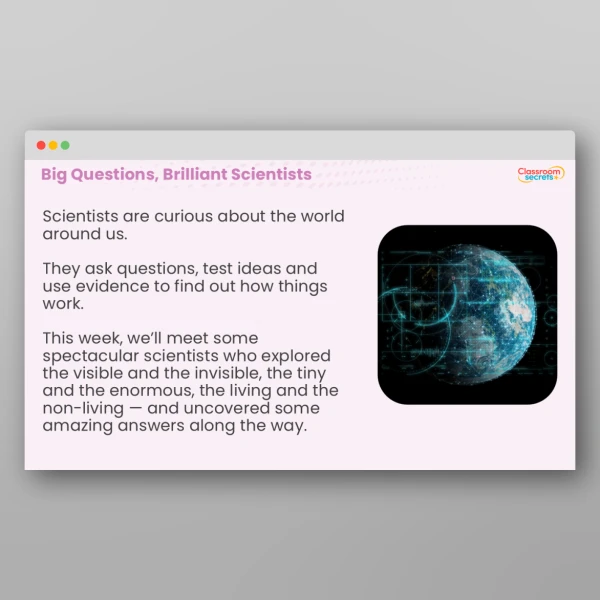
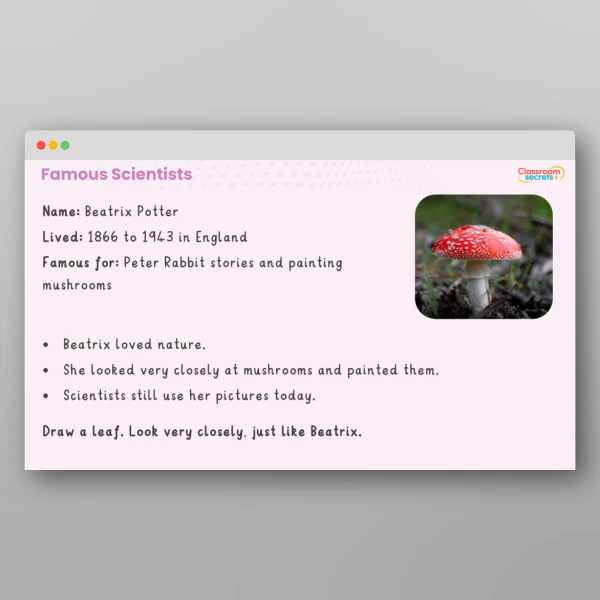
Spark curiosity about the people behind big scientific discoveries with this Scientist of the Day PowerPoint for Years 1 and 2. The presentation begins by explaining what a scientist does, then introduces five scientists from different times and places: Beatrix Potter, Hamza Yassin, George Washington Carver, Syukuro Manabe and Charles Macintosh. Each scientist has one slide with simple facts about when and where they lived, three short sentences about their work and a question or activity to get pupils talking, looking and testing. The text is kept short so that young children can follow along as it is read aloud. The speaker notes give teachers extra background facts and curriculum links. A final “Time to reflect” slide asks pupils what helped these scientists and whether they could be a scientist too.
The prompts link closely to the Year 1 and Year 2 science curriculum and help develop working scientifically skills. Pupils look closely at a leaf and draw it, just as Beatrix Potter studied mushrooms (plants). They think about which animals live near their school (animals and habitats) and talk about what plants need to grow well (plants). They describe the weather today (seasonal changes) and test which materials keep water out (everyday materials). The slideshow works well as a daily starter across a week, with one scientist each day, or as part of a science lesson, assembly or themed event.
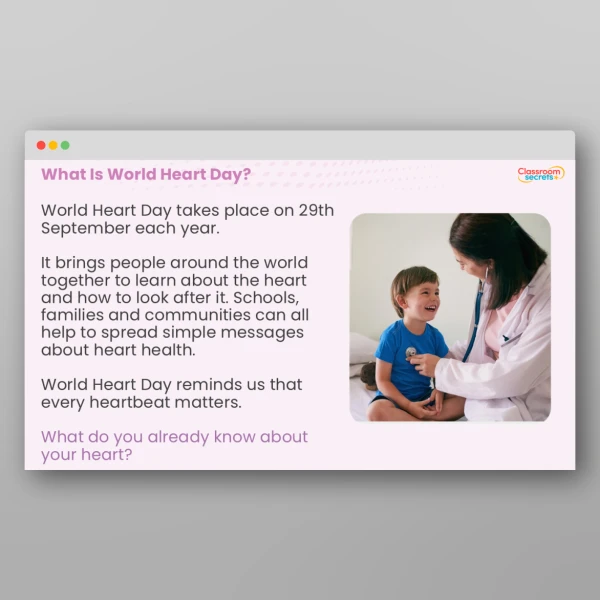
This resource is ideal for marking World Science Day for Peace and Development on 10 November. The day celebrates the role of science in society and the importance of science being shared by everyone. The five scientists come from England, Scotland, Sudan, Japan and the USA, and their work spans more than 200 years. This helps pupils see that great scientific thinking comes from many cultures and backgrounds. Hamza Yassin’s wildlife films and Syukuro Manabe’s weather research can lead into talk about how science helps us care for animals and protect our planet. Beatrix Potter is known to many children for her Peter Rabbit stories, so learning that she was also a mushroom expert can open discussion about the different people who can be scientists.
The presentation also fits naturally into British Science Week in March, which encourages hands-on investigation and celebrates science, technology, engineering and maths. The activities are simple, low-cost and could run across the week, such as testing classroom materials for waterproofing or going on a nature walk around the school grounds. Pupils could then share their drawings and findings in a class display or a science showcase for parents. The questions on each slide are also great prompts for pupils to start asking and answering their own scientific questions during the week.
Select a tag to view relevant resources
Autumn
Spring
Summer
Science Events
Engineers Week