Spring 1 Arithmetic Test

Recently updated
Test Practice
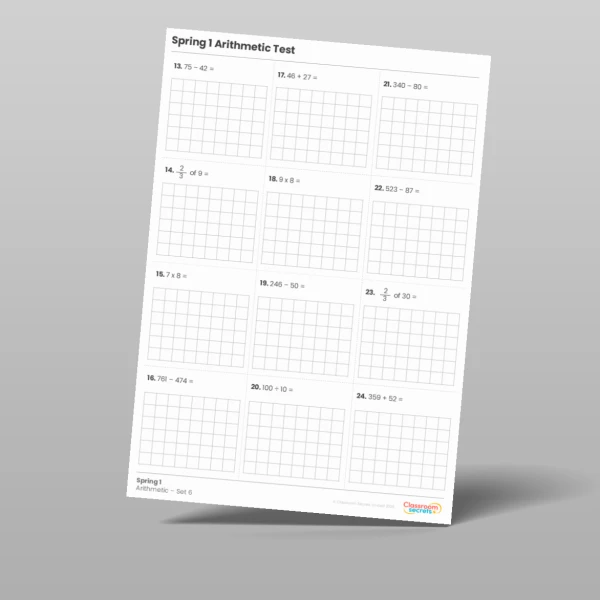
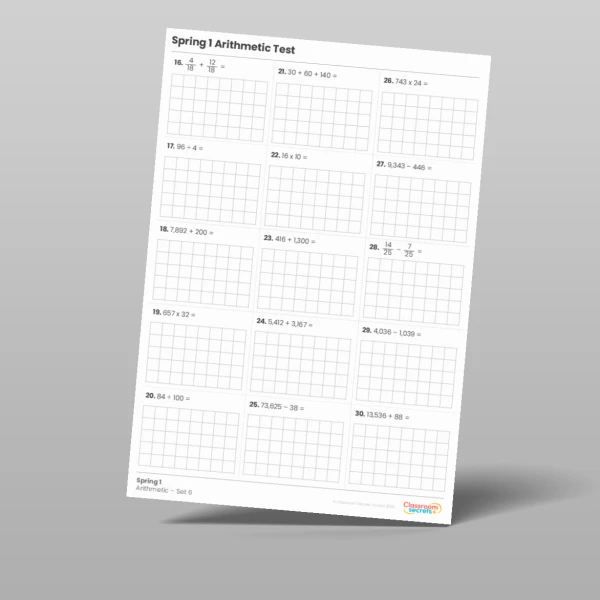
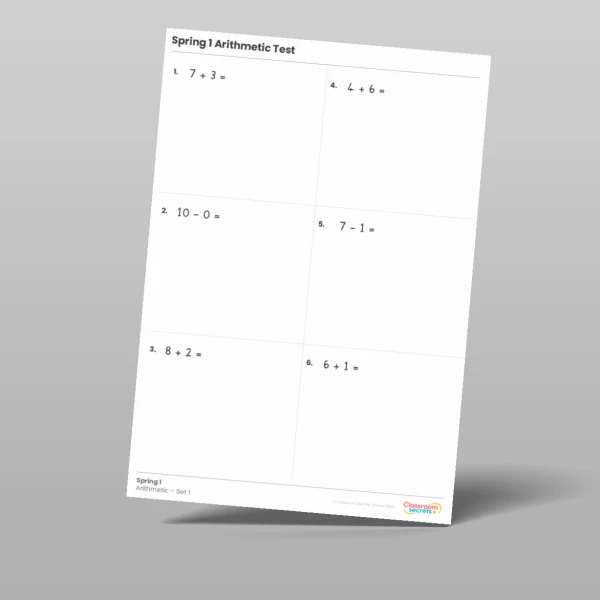
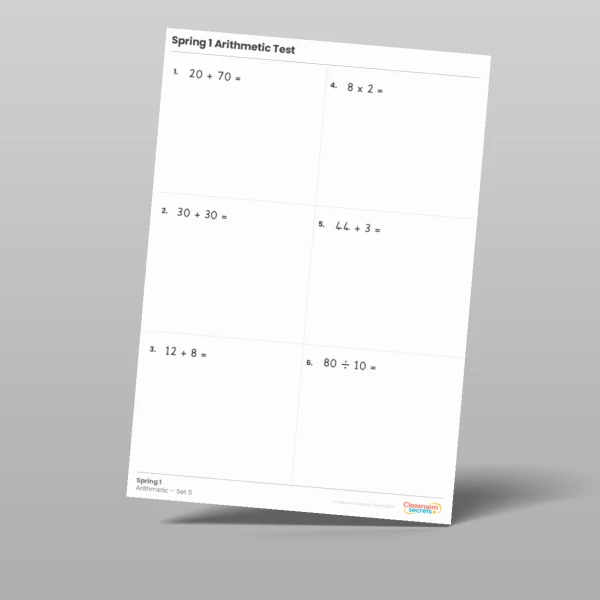
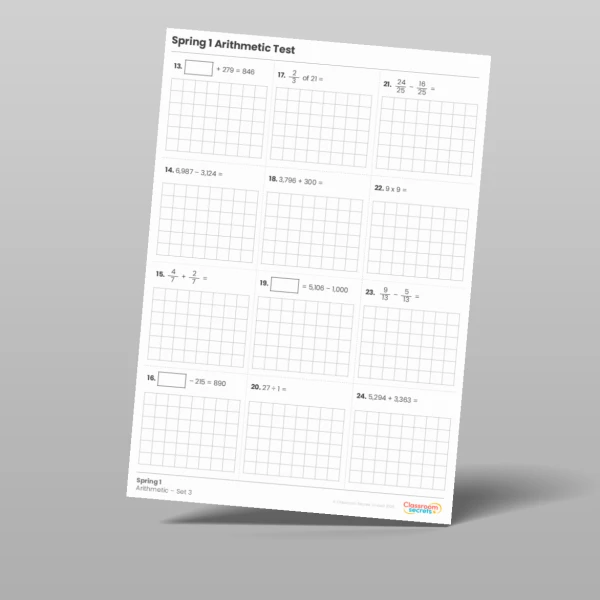
An image of the Spring 1 Arithmetic Test Resource


This Year 6 Spring 1 Arithmetic Test resource is an excellent way to identify gaps in learning in your Year 2 class. They can also be used to help get children prepared for their SATs test, if you're choosing to sit them this year!

The questions have been laid out in a way that is easy for children to access, and the answers are laid out to make marking as simple as possible. We've also included the national curriculum objective code next to each of the answers so you know exactly which objectives have been covered, and differentiated the resource six ways, so you know everyone in your class can access the questions.

We have updated these resources so that the use much less paper, so you don't need to worry about printing costs!

Download today to try them out.

This resource is designed to align to White Rose Maths version 3. Classroom Secrets Limited is not affiliated with, endorsed by, or in any way connected to White Rose Education Limited. Our products are original to Classroom Secrets Limited and any reference to White Rose Maths is solely for the purpose of indicating compatibility and does not imply any association with White Rose Education.


Curriculum Objectives

  • Add and subtract numbers mentally, including: three-digit number and ones; three-digit number and tens; three-digit number and hundreds
  • Solve problems, including missing number problems, using number facts, place value, and more complex addition and subtraction
  • Recognise, find and write fractions of a discrete set of objects: unit fractions and non-unit fractions with small denominators
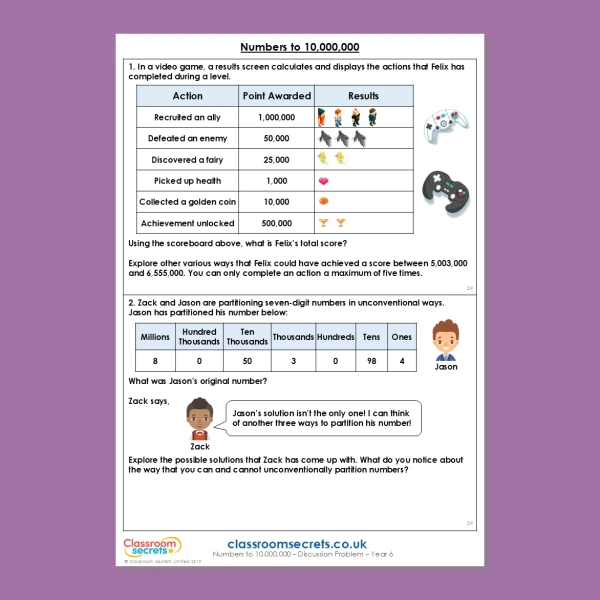
  • Find 1,000 more or less than a given number
  • Add and subtract numbers with up to 4 digits using the formal written methods of columnar addition and subtraction where appropriate
  • Use place value, known and derived facts to multiply and divide mentally, including: multiplying by 0 and 1; dividing by 1; multiplying together three numbers
  • Multiply two-digit and three-digit numbers by a one-digit number using formal written layout
  • Add and subtract numbers mentally with increasingly large numbers
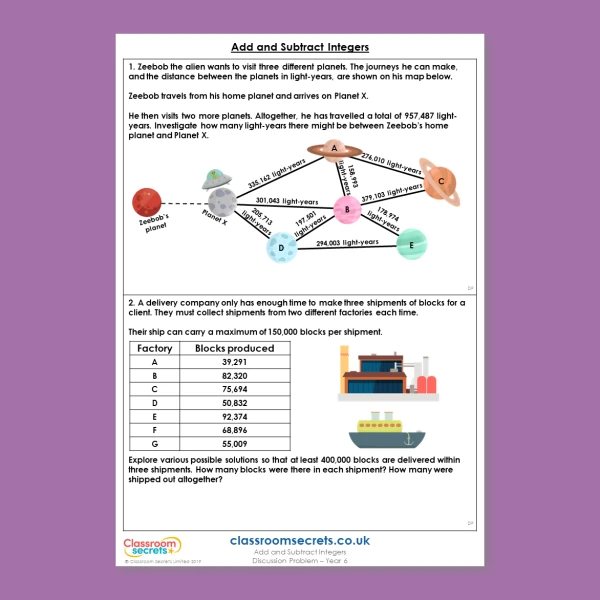
  • Add and subtract whole numbers with more than 4 digits, including using formal written methods (columnar addition and subtraction)
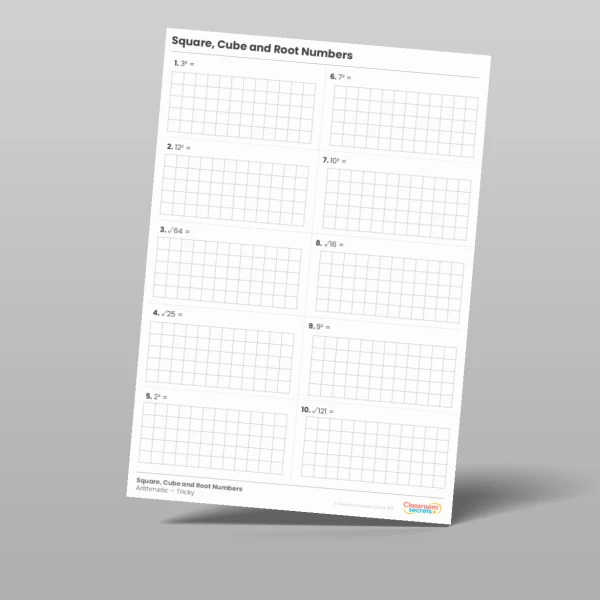
  • Recognise and use square numbers and cube numbers, and the notation for squared (2) and cubed (3)
  • Multiply and divide numbers mentally drawing upon known facts
  • Multiply and divide whole numbers and those involving decimals by 10, 100 and 1,000
  • Divide numbers up to 4 digits by a one-digit number using the formal written method of short division and interpret remainders appropriately for the context
  • Multiply proper fractions and mixed numbers by whole numbers, supported by materials and diagrams
  • Solve problems involving number up to three decimal places
  • Perform mental calculations, including with mixed operations and large numbers
  • Multiply multi-digit numbers up to 4 digits by a two-digit whole number using the formal written method of long multiplication
  • Divide numbers up to 4 digits by a two-digit whole number using the formal written method of long division, and interpret remainders as whole number remainders, fractions, or by rounding, as appropriate for the context
  • Solve problems involving addition, subtraction, multiplication and division
  • Use their knowledge of the order of operations to carry out calculations involving the four operations
  • Add and subtract fractions with different denominators and mixed numbers, using the concept of equivalent fractions
  • Multiply simple pairs of proper fractions, writing the answer in its simplest form [for example, 1/4 × 1/2 = 1/8]
  • Divide proper fractions by whole numbers [for example, 1/3 ÷ 2 = 1/6 ]
  • Identify the value of each digit in numbers given to three decimal places and multiply and divide numbers by 10, 100 and 1,000 giving answers up to three decimal places
  • Multiply one-digit numbers with up to two-decimal places by whole numbers
  • Solve problems involving the calculation of percentages [for example, of measures, and such as 15% of 360] and the use of percentages for comparison

Tags

Test Practice

Spring

3C1

3C4

3F1b

4N2b

4C2

4C6b

4C7

5C1

5C2

5C5d

5C6a

5C6b

5C7b

5F5

5F10

6C6

6C7a

6C7b

6C8

6C9

6F4

6F5a

6F5b

6F9a

6F9b

6R2